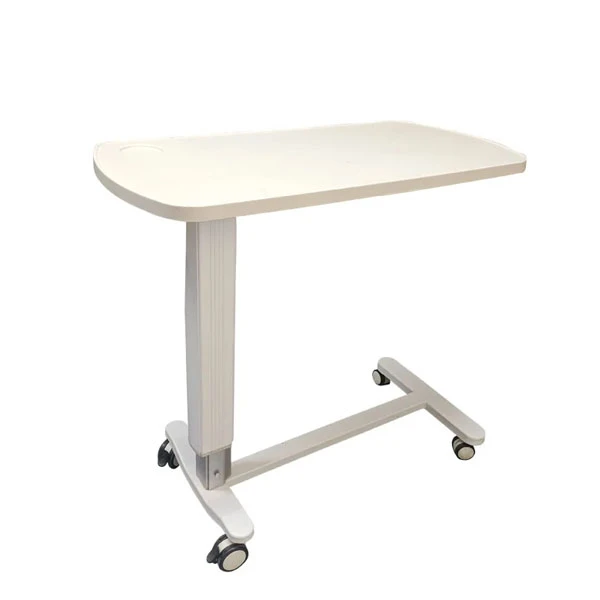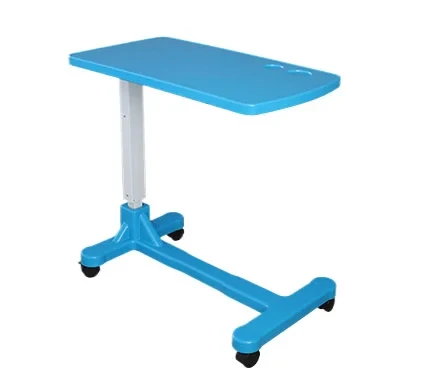
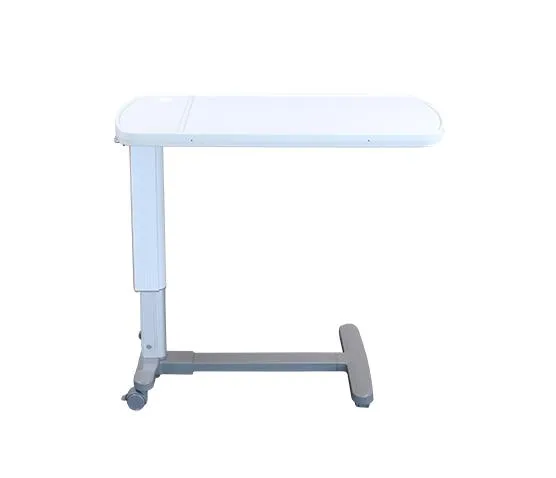
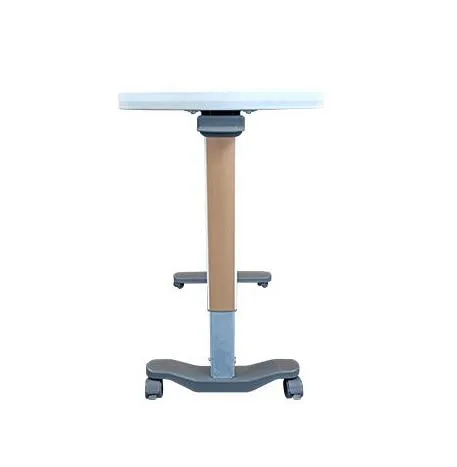
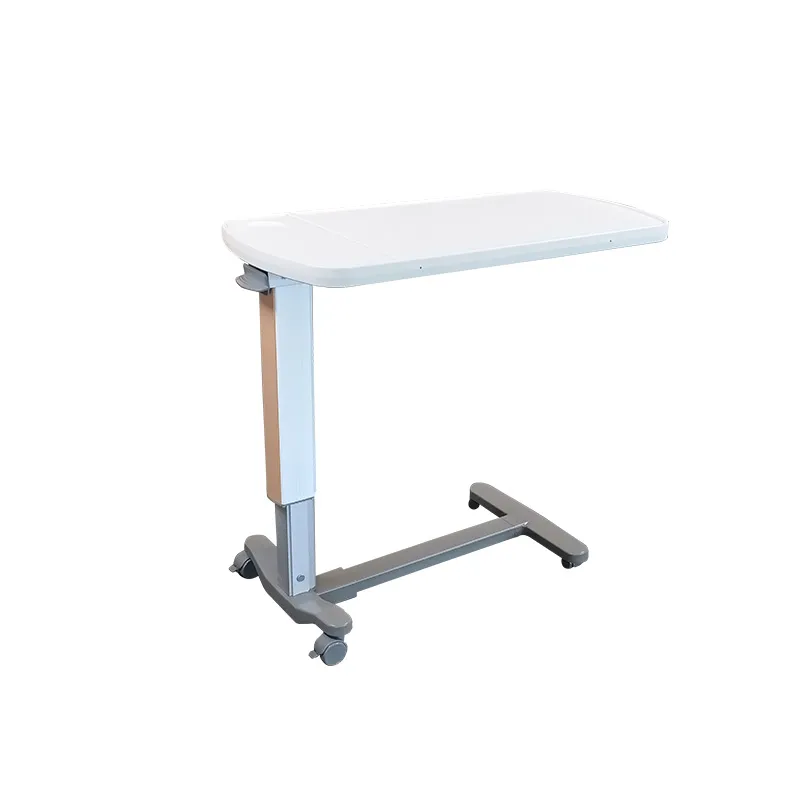
PP Tavolo da letto ospedaliero regolabile per paziente ZF-BT022
Parametro tecnico:
|
Piano del tavolo |
895*445mm |
|
Altezza minima del tavolo |
660mm |
|
Altezza massima del tavolo |
945mm |
Configurazione tecnica:
|
Molla a gas |
1 set |
|
Piano del tavolo in PP |
1 pz. |
|
Φ25mm Caster |
2 pezzi |
|
Φ50mm Caster |
2 pezzi |
|
Maniglia di regolazione dell'altezza |
1 pz. |
Controllo di qualità:
- Molla a gas: Il meccanismo a molla a gas integrato nel tavolo da letto dell'ospedale svolge un ruolo fondamentale nel migliorare sia la funzionalità che la sicurezza. Questo design consente di regolare il piano del tavolo in modo fluido e senza sforzo a varie altezze, rendendolo altamente adattabile alle esigenze specifiche dei pazienti, che stiano mangiando, leggendo o utilizzando dispositivi elettronici. L'uso di una molla a gas riduce il rischio di movimenti improvvisi, riducendo al minimo il potenziale di lesioni accidentali. Consente inoltre ai pazienti, compresi quelli con forza o mobilità limitate, di regolare il tavolo da soli senza richiedere assistenza, promuovendo un maggiore senso di indipendenza. Questa attenta integrazione di una molla a gas nel design dei tavoli da letto evidenzia l'attenzione al comfort e alla sicurezza del paziente negli ambienti sanitari.
- Materiale: La composizione del materiale del tavolo da letto ospedaliero contribuisce in modo significativo alla sua durevolezza, sicurezza e facilità d'uso. Il piano del tavolo è spesso realizzato in materiale PP (polipropilene), che è preferito per le sue proprietà leggere, atossiche e facili da pulire, rendendolo ideale per un ambiente sanitario in cui l'igiene è fondamentale. Inoltre, il corpo principale e la struttura di supporto del tavolo sono in genere realizzati in lega di alluminio, che fornisce resistenza e stabilità pur rimanendo sufficientemente leggeri da poter essere manovrati. La lega di alluminio è anche resistente alla corrosione, il che è essenziale in un ambiente ospedaliero in cui il tavolo può essere pulito frequentemente con vari disinfettanti. Insieme, questi materiali assicurano che il tavolo da letto sia funzionale e duraturo, in grado di resistere alle rigorose esigenze dell'uso medico quotidiano.
- Standard di sicurezza: Hospital overbed table is designed and manufactured to meet stringent safety and quality standards, ensuring they are suitable for medical environments. They comply with the latest ISO 9001 and ISO 13485 standards, which are benchmarks for quality management systems and the specific requirements for medical devices, respectively. Additionally, these tables are certified by the CE marking, affirming that they meet EU safety, health, and environmental protection requirements. In the United States, they adhere to FDA regulations, ensuring that they are safe and effective for their intended use. Compliance with these standards not only guarantees the tables’ reliability and safety but also builds trust among healthcare providers and patients in the quality and safety of the equipment used in medical care.
Dettaglio accessorio:
-
- Piano del tavolo: Il piano del tavolo da letto dell'ospedale è stato progettato con cura tenendo a mente la praticità e la funzionalità del paziente. Realizzato in materiale PP (polipropilene) bianco, offre una superficie pulita, atossica e antimacchia, facile da manutenere e disinfettare, fondamentale per mantenere un ambiente sterile negli ospedali. Il design include caratteristiche specializzate come un'area incassata per uso generale e un portabicchieri integrato, che ne migliorano l'utilità. La sezione incassata aiuta a tenere saldamente in posizione oggetti come libri, dispositivi medici o utensili per mangiare, riducendo al minimo il rischio che scivolino quando il tavolo viene spostato o regolato. Inoltre, il portabicchieri integrato impedisce le fuoriuscite, il che è particolarmente importante in un ambiente sanitario per evitare incidenti e garantire che i liquidi siano tenuti lontani dai dispositivi critici e dal paziente. Questa combinazione di scelta dei materiali e design funzionale rende il piano del tavolo non solo durevole e igienico, ma anche altamente pratico per le diverse esigenze dei pazienti ospedalieri.
- Lanciatore: The mobility and stability of hospital overbed tables are significantly enhanced by their caster design, which features four omnidirectional wheels. This setup includes two larger casters with a diameter of 50mm and two smaller casters with a diameter of 25mm. The larger wheels are equipped with independent brakes, providing robust stopping power and ensuring the table remains securely in place when needed. This braking mechanism is crucial for maintaining safety, preventing the table from moving or shifting when patients use it for eating, reading, or supporting medical devices. The smaller wheels, while not braked, contribute to the table’s overall ease of maneuverability, allowing it to glide smoothly over various floor types within the hospital environment. This combination of differently sized wheels optimizes both the table’s mobility for repositioning and its stability when stationary, meeting the dynamic needs of a hospital setting.
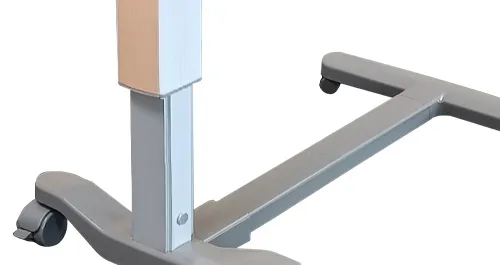
- Base: The base of the hospital overbed table is thoughtfully designed with an aluminum alloy cover, which serves multiple crucial purposes in a healthcare environment. Aluminum alloy, known for its durability and resistance to corrosion, adds structural integrity and longevity to the table. The material’s smooth surface is particularly beneficial in hospital settings as it prevents the accumulation of dust and bacteria, crucial for maintaining a sterile environment. This feature makes the base much easier to clean and disinfect, a vital aspect in preventing hospital-acquired infections. The combination of aluminum alloy and its protective cover ensures that the table not only withstands frequent use and cleaning but also adheres to the high standards of hygiene required in medical settings, thereby safeguarding both patient and staff health.
- Colonna di sollevamento: La colonna di sollevamento del tavolo da letto dell'ospedale è meticolosamente progettata utilizzando una lega di alluminio, che ne migliora sia le proprietà funzionali che igieniche. Questa colonna presenta un design in cui la sezione superiore racchiude quella inferiore, una scelta strategica che riduce al minimo le fessure e gli spazi vuoti in cui i batteri potrebbero altrimenti accumularsi. Tale configurazione è altamente vantaggiosa in un ambiente ospedaliero in cui è fondamentale prevenire la diffusione di agenti patogeni. La lega di alluminio, nota per la sua robustezza e resistenza alla corrosione, garantisce che la colonna possa resistere a frequenti regolazioni e all'uso intenso tipico degli ambienti ospedalieri. Inoltre, le superfici lisce della lega di alluminio sono facili da pulire e disinfettare, il che è essenziale per mantenere un ambiente sterile. Questo design ponderato non solo facilita la manutenzione, ma contribuisce anche in modo significativo all'igiene e alla sicurezza complessive del tavolo da letto dell'ospedale.
-
COLONNA DI SOLLEVAMENTO
-
Colonna di supporto in lega di alluminio, la colonna superiore imposta il design della colonna inferiore, previene efficacemente l'accumulo di batteri, facile da pulire.
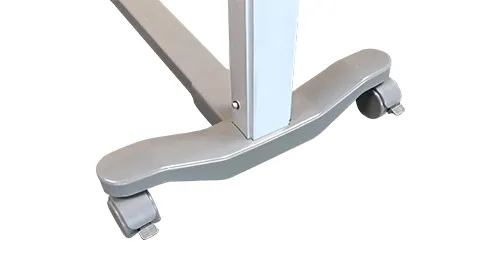
COLTELLO
Quattro ruote universali. Due ruote da 50 mm di diametro con freni indipendenti per una migliore frenata. Altre due ruote da 25 mm di diametro.
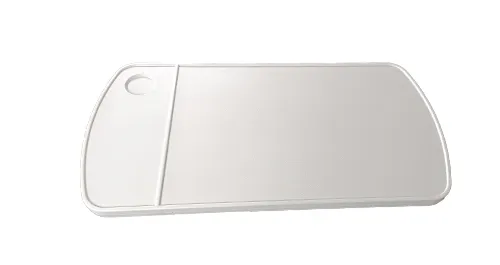
PIANO DEL TAVOLO
Piano di lavoro in PP bianco con design incassato per bicchieri d'acqua e aree di utilizzo principale.
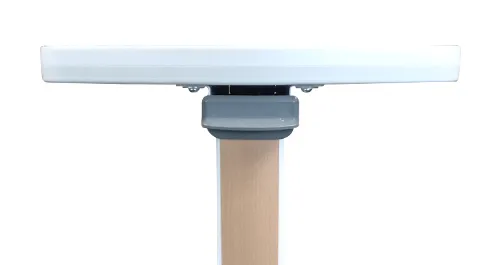
REGOLAZIONE DELL'ALTEZZA
Regolare l'altezza sollevando la maniglia laterale o premendo il piano del tavolo. L'intervallo di regolazione è 660mm-945mm.
-
Height Adjustment Function and Operation Mechanism of PP Adjustable Hospital Moving Table
ZhaofaMed’s PP adjustable hospital overbed table redefines convenience in patient care through its precision-engineered height adjustment system, a core feature that enhances its versatility as a hospital moving table. Designed to adapt to diverse patient needs, this table merges intuitive operation with robust mechanics, making it an essential tool in wards, rehabilitation centers, and home care settings.
The height adjustment range is meticulously calibrated to accommodate various scenarios: from 70cm (ideal for seated patients) to 110cm (suitable for standing or semi-recumbent use). This flexibility ensures compatibility with different bed heights, wheelchairs, and treatment protocols, allowing patients to engage in activities like dining, reading, or medical procedures without leaving their beds. As a hospital moving table, this adaptability transforms static care spaces into dynamic environments, supporting both independence and clinical efficiency.
At the heart of its operation is a gas spring-assisted mechanism, chosen for its smooth, silent performance. The system uses compressed gas to counterbalance the table’s weight, enabling effortless height adjustments with minimal force—even for patients with limited upper body strength. A large, ergonomically positioned release lever (located under the table edge) activates the mechanism; squeezing it unlocks the height lock, allowing users to raise or lower the table to their desired position. Releasing the lever engages a safety lock, securing the table firmly in place to prevent unintended movement—a critical safety feature in busy healthcare settings.
The mechanism’s durability is reinforced by high-grade materials: the adjustment column is crafted from anodized aluminum, resistant to corrosion and wear, while the PP tabletop (smooth, non-porous) adds lightweight stability. This combination ensures the hospital's moving table maintains consistent performance over thousands of adjustments, withstanding frequent use in high-traffic areas.
For caregivers, the intuitive design reduces training time and streamlines patient assistance, as adjustments can be made quickly during rounds. For patients, the ability to control table height fosters a sense of autonomy, enhancing their overall care experience. When paired with the table’s smooth-rolling casters (a hallmark of a functional hospital moving table), the height adjustment system creates a versatile solution that adapts seamlessly to evolving care needs.
In essence, ZhaofaMed’s focus on user-centric engineering transforms this overbed table into more than a utility—it becomes a tool that empowers patients and simplifies care, with height adjustment at its core. This attention to detail solidifies its role as a leading hospital moving table in modern healthcare environments.
Boosting Patient Independence and Care Efficiency: The Role of Adjustable Hospital Moving Tables
ZhaofaMed’s adjustable hospital overbed table, as a versatile hospital moving table, serves as a catalyst for enhancing patient autonomy while streamlining caregiver workflows. Its design prioritizes both self-sufficiency for patients and operational efficiency for staff, making it a transformative tool in healthcare settings.
For patients, the table’s adjustability fosters newfound independence. With height ranges from 70cm to 110cm and smooth angle adjustments (0°–30°), individuals can easily position the table to suit their activities—whether dining, reading, using a tablet, or managing personal items—without relying on assistance. This autonomy is particularly impactful for post-surgery or rehabilitation patients, as it restores a sense of control over daily routines, boosting mental well-being and accelerating recovery. The hospital's moving table’s lightweight PP top (4kg) and easy-glide casters allow patients to reposition it independently, further reducing dependency on staff for minor adjustments.
Caregivers benefit from significant efficiency gains. The table’s intuitive design minimizes the need for constant intervention: its one-touch height lock and stable base eliminate time spent readjusting surfaces during meal times or medication administration. The spacious 80cm×45cm tabletop, featuring built-in cup holders and a recessed tray, organizes essentials (water, meds, utensils) in one place, reducing trips to fetch items—a critical advantage in busy wards. As a hospital moving table, its maneuverability (via 360° rotating casters with brakes) allows seamless movement between beds, enabling staff to serve multiple patients with minimal effort.
Additionally, the table’s compatibility with various care scenarios—from acute wards to home care—enhances workflow consistency. Its durable aluminum frame and easy-to-clean surface (resistant to disinfectants) reduce maintenance time, ensuring it remains functional round-the-clock. For patients requiring frequent monitoring, the table doubles as a stable surface for medical devices (e.g., blood pressure monitors), consolidating care tools and cutting down on setup time.
By bridging patient empowerment and operational efficiency, this hospital's moving table transcends its utility as a mere furniture piece. It becomes a key contributor to better care outcomes—empowering patients to reclaim independence while enabling caregivers to focus on high-priority tasks. In essence, it redefines the role of assistive equipment in fostering a more efficient, patient-centric healthcare environment.
hospital moving table