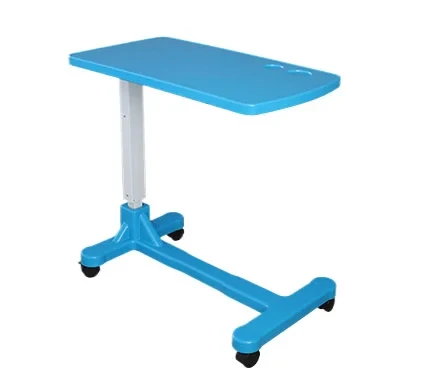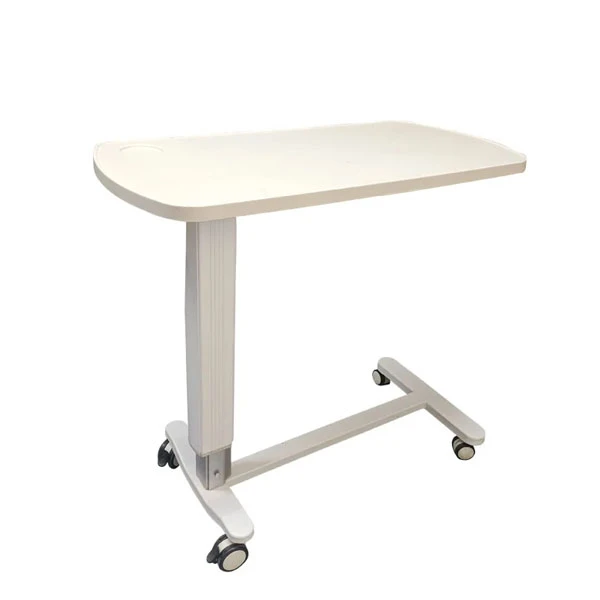
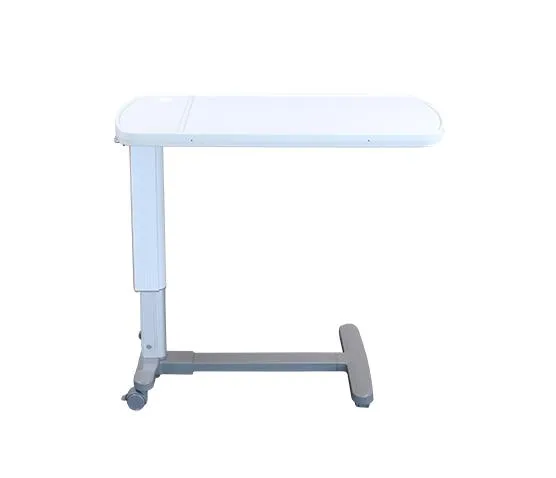
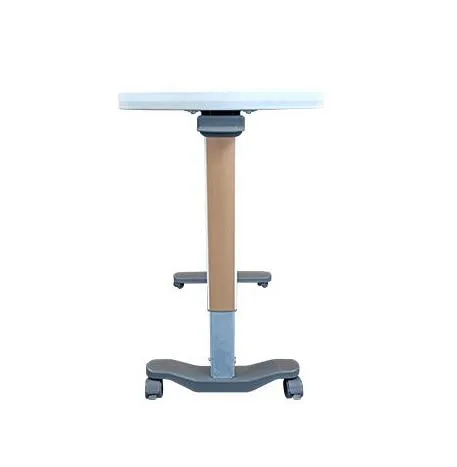
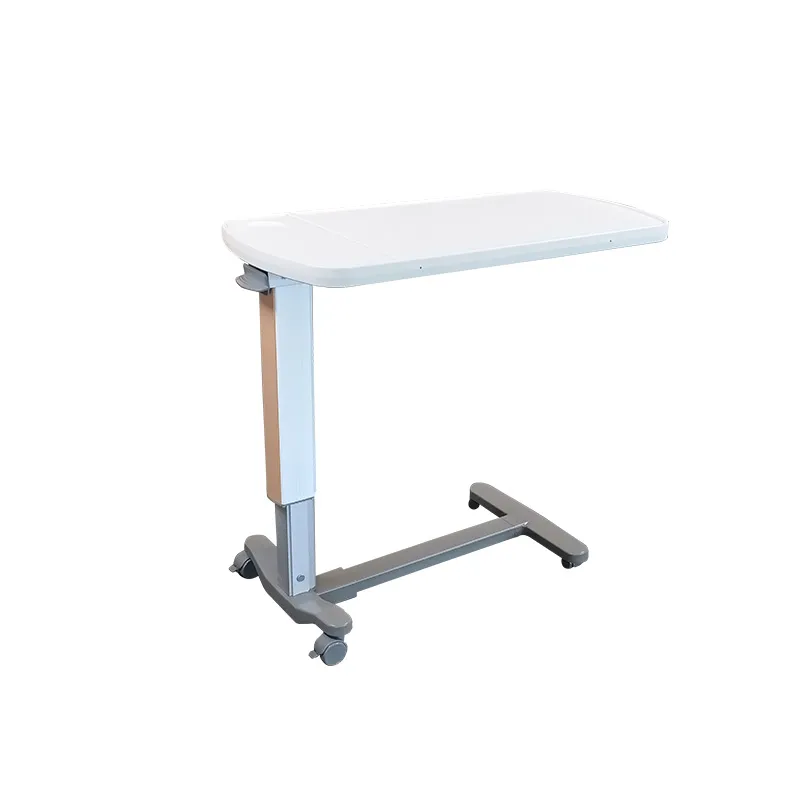
Table de lit d'hôpital réglable en PP pour patient ZF-BT022
Paramètre technique :
|
Plateau de table |
895*445mm |
|
Hauteur minimale de la table |
660 mm |
|
Hauteur de la table max. |
945 mm |
Configuration technique :
|
Ressort à gaz |
1 jeu |
|
Plateau de table en PP |
1 pièce |
|
Φ25mm Caster |
2 pièces |
|
Φ50mm Caster |
2 pièces |
|
Poignée de réglage de la hauteur |
1 pièce |
Contrôle de qualité:
- Ressort à gaz : Le mécanisme à ressort à gaz intégré dans la table de lit d'hôpital joue un rôle essentiel dans l'amélioration de la fonctionnalité et de la sécurité. Cette conception permet au plateau de table d'être ajusté en douceur et sans effort à différentes hauteurs, ce qui le rend hautement adaptable aux besoins spécifiques des patients, qu'ils mangent, lisent ou utilisent des appareils électroniques. L'utilisation d'un ressort à gaz réduit le risque de mouvements brusques, minimisant ainsi le risque de blessures accidentelles. Il permet également aux patients, y compris ceux dont la force ou la mobilité sont limitées, d'ajuster eux-mêmes la table sans avoir besoin d'aide, favorisant ainsi un plus grand sentiment d'indépendance. Cette intégration réfléchie d'un ressort à gaz dans la conception des tables de lit souligne l'accent mis sur le confort et la sécurité des patients dans les établissements de santé.
- Matériel: La composition matérielle des tables de lit d'hôpital contribue de manière significative à leur durabilité, leur sécurité et leur facilité d'utilisation. Le plateau de la table est souvent fabriqué en PP (polypropylène), un matériau apprécié pour ses propriétés légères, non toxiques et faciles à nettoyer, ce qui le rend idéal pour un environnement de soins de santé où l'hygiène est primordiale. De plus, le corps principal et la structure de support de la table sont généralement construits en alliage d'aluminium, qui offre résistance et stabilité tout en restant suffisamment léger pour être manœuvré. L'alliage d'aluminium est également résistant à la corrosion, ce qui est essentiel dans un environnement hospitalier où la table peut être fréquemment nettoyée avec divers désinfectants. Ensemble, ces matériaux garantissent que la table de lit est à la fois fonctionnelle et durable, capable de résister aux exigences rigoureuses d'une utilisation médicale quotidienne.
- Norme de sécurité : Hospital overbed table is designed and manufactured to meet stringent safety and quality standards, ensuring they are suitable for medical environments. They comply with the latest ISO 9001 and ISO 13485 standards, which are benchmarks for quality management systems and the specific requirements for medical devices, respectively. Additionally, these tables are certified by the CE marking, affirming that they meet EU safety, health, and environmental protection requirements. In the United States, they adhere to FDA regulations, ensuring that they are safe and effective for their intended use. Compliance with these standards not only guarantees the tables’ reliability and safety but also builds trust among healthcare providers and patients in the quality and safety of the equipment used in medical care.
Détail de l'accessoire :
-
- Plateau de table : Le plateau de la table de lit d'hôpital est soigneusement conçu pour le confort et la fonctionnalité du patient. Fabriqué en polypropylène blanc, il offre une surface propre, non toxique et résistante aux taches, facile à entretenir et à désinfecter, essentielle pour maintenir un environnement stérile dans les hôpitaux. La conception comprend des caractéristiques spécialisées telles qu'une zone encastrée pour une utilisation générale et un porte-gobelet intégré, améliorant son utilité. La section encastrée permet de maintenir en place des objets tels que des livres, des appareils médicaux ou des ustensiles de cuisine, minimisant ainsi le risque qu'ils ne glissent lorsque la table est déplacée ou ajustée. De plus, le porte-gobelet intégré empêche les déversements, ce qui est particulièrement important dans un environnement de soins de santé pour éviter les accidents et garantir que les liquides sont tenus à l'écart des appareils critiques et du patient. Cette combinaison de choix de matériaux et de conception fonctionnelle rend le plateau de table non seulement durable et hygiénique, mais également très pratique pour les divers besoins des patients hospitalisés.
- Roulette: The mobility and stability of hospital overbed tables are significantly enhanced by their caster design, which features four omnidirectional wheels. This setup includes two larger casters with a diameter of 50mm and two smaller casters with a diameter of 25mm. The larger wheels are equipped with independent brakes, providing robust stopping power and ensuring the table remains securely in place when needed. This braking mechanism is crucial for maintaining safety, preventing the table from moving or shifting when patients use it for eating, reading, or supporting medical devices. The smaller wheels, while not braked, contribute to the table’s overall ease of maneuverability, allowing it to glide smoothly over various floor types within the hospital environment. This combination of differently sized wheels optimizes both the table’s mobility for repositioning and its stability when stationary, meeting the dynamic needs of a hospital setting.
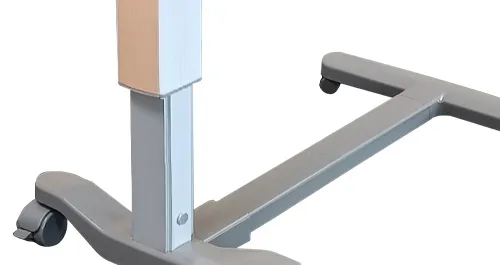
- Base: The base of the hospital overbed table is thoughtfully designed with an aluminum alloy cover, which serves multiple crucial purposes in a healthcare environment. Aluminum alloy, known for its durability and resistance to corrosion, adds structural integrity and longevity to the table. The material’s smooth surface is particularly beneficial in hospital settings as it prevents the accumulation of dust and bacteria, crucial for maintaining a sterile environment. This feature makes the base much easier to clean and disinfect, a vital aspect in preventing hospital-acquired infections. The combination of aluminum alloy and its protective cover ensures that the table not only withstands frequent use and cleaning but also adheres to the high standards of hygiene required in medical settings, thereby safeguarding both patient and staff health.
- Colonne de levage : La colonne élévatrice de la table de lit d'hôpital est méticuleusement conçue en alliage d'aluminium, ce qui améliore à la fois ses propriétés fonctionnelles et hygiéniques. Cette colonne présente une conception où la partie supérieure entoure la partie inférieure, un choix stratégique qui minimise les crevasses et les interstices où les bactéries pourraient autrement s'accumuler. Une telle configuration est très avantageuse dans un environnement hospitalier où la prévention de la propagation des agents pathogènes est primordiale. L'alliage d'aluminium, connu pour sa robustesse et sa résistance à la corrosion, garantit que la colonne peut supporter des ajustements fréquents et une utilisation intensive typique des environnements hospitaliers. De plus, les surfaces lisses de l'alliage d'aluminium sont faciles à nettoyer et à désinfecter, ce qui est essentiel pour maintenir un environnement stérile. Cette conception réfléchie facilite non seulement l'entretien, mais contribue également de manière significative à l'hygiène et à la sécurité globales de la table de lit d'hôpital.
-
COLONNE DE LEVAGE
-
Colonne de support en alliage d'aluminium, la colonne supérieure définit la conception de la colonne inférieure, empêche efficacement l'accumulation bactérienne, facile à nettoyer.
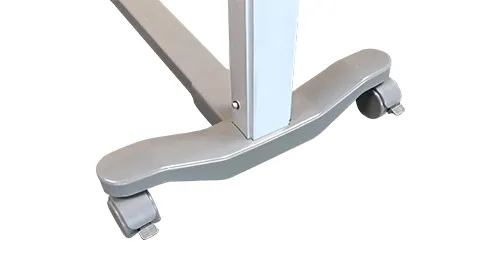
ROULETTE
Quatre roulettes universelles. Deux roulettes de diamètre 50 mm avec freins indépendants pour un meilleur freinage. Deux autres roulettes de diamètre 25 mm.
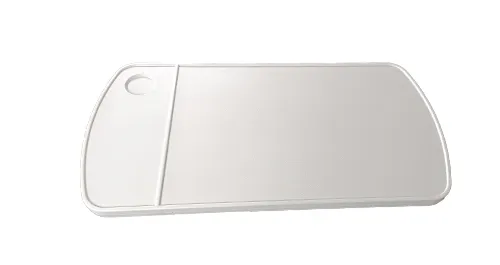
PLATEAU DE TABLE
Bureau en PP blanc avec conception encastrée pour les tasses d'eau et les principales zones d'utilisation.
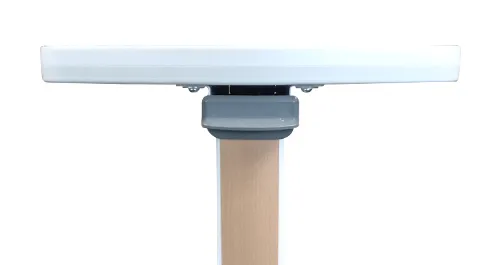
RÉGLAGE DE LA HAUTEUR
Réglez la hauteur en soulevant la poignée latérale ou en appuyant sur le plateau de la table. La plage de réglage est de 660 mm à 945 mm.
-
Height Adjustment Function and Operation Mechanism of PP Adjustable Hospital Moving Table
ZhaofaMed’s PP adjustable hospital overbed table redefines convenience in patient care through its precision-engineered height adjustment system, a core feature that enhances its versatility as a hospital moving table. Designed to adapt to diverse patient needs, this table merges intuitive operation with robust mechanics, making it an essential tool in wards, rehabilitation centers, and home care settings.
The height adjustment range is meticulously calibrated to accommodate various scenarios: from 70cm (ideal for seated patients) to 110cm (suitable for standing or semi-recumbent use). This flexibility ensures compatibility with different bed heights, wheelchairs, and treatment protocols, allowing patients to engage in activities like dining, reading, or medical procedures without leaving their beds. As a hospital moving table, this adaptability transforms static care spaces into dynamic environments, supporting both independence and clinical efficiency.
At the heart of its operation is a gas spring-assisted mechanism, chosen for its smooth, silent performance. The system uses compressed gas to counterbalance the table’s weight, enabling effortless height adjustments with minimal force—even for patients with limited upper body strength. A large, ergonomically positioned release lever (located under the table edge) activates the mechanism; squeezing it unlocks the height lock, allowing users to raise or lower the table to their desired position. Releasing the lever engages a safety lock, securing the table firmly in place to prevent unintended movement—a critical safety feature in busy healthcare settings.
The mechanism’s durability is reinforced by high-grade materials: the adjustment column is crafted from anodized aluminum, resistant to corrosion and wear, while the PP tabletop (smooth, non-porous) adds lightweight stability. This combination ensures the hospital's moving table maintains consistent performance over thousands of adjustments, withstanding frequent use in high-traffic areas.
For caregivers, the intuitive design reduces training time and streamlines patient assistance, as adjustments can be made quickly during rounds. For patients, the ability to control table height fosters a sense of autonomy, enhancing their overall care experience. When paired with the table’s smooth-rolling casters (a hallmark of a functional hospital moving table), the height adjustment system creates a versatile solution that adapts seamlessly to evolving care needs.
In essence, ZhaofaMed’s focus on user-centric engineering transforms this overbed table into more than a utility—it becomes a tool that empowers patients and simplifies care, with height adjustment at its core. This attention to detail solidifies its role as a leading hospital moving table in modern healthcare environments.
Boosting Patient Independence and Care Efficiency: The Role of Adjustable Hospital Moving Tables
ZhaofaMed’s adjustable hospital overbed table, as a versatile hospital moving table, serves as a catalyst for enhancing patient autonomy while streamlining caregiver workflows. Its design prioritizes both self-sufficiency for patients and operational efficiency for staff, making it a transformative tool in healthcare settings.
For patients, the table’s adjustability fosters newfound independence. With height ranges from 70cm to 110cm and smooth angle adjustments (0°–30°), individuals can easily position the table to suit their activities—whether dining, reading, using a tablet, or managing personal items—without relying on assistance. This autonomy is particularly impactful for post-surgery or rehabilitation patients, as it restores a sense of control over daily routines, boosting mental well-being and accelerating recovery. The hospital's moving table’s lightweight PP top (4kg) and easy-glide casters allow patients to reposition it independently, further reducing dependency on staff for minor adjustments.
Caregivers benefit from significant efficiency gains. The table’s intuitive design minimizes the need for constant intervention: its one-touch height lock and stable base eliminate time spent readjusting surfaces during meal times or medication administration. The spacious 80cm×45cm tabletop, featuring built-in cup holders and a recessed tray, organizes essentials (water, meds, utensils) in one place, reducing trips to fetch items—a critical advantage in busy wards. As a hospital moving table, its maneuverability (via 360° rotating casters with brakes) allows seamless movement between beds, enabling staff to serve multiple patients with minimal effort.
Additionally, the table’s compatibility with various care scenarios—from acute wards to home care—enhances workflow consistency. Its durable aluminum frame and easy-to-clean surface (resistant to disinfectants) reduce maintenance time, ensuring it remains functional round-the-clock. For patients requiring frequent monitoring, the table doubles as a stable surface for medical devices (e.g., blood pressure monitors), consolidating care tools and cutting down on setup time.
By bridging patient empowerment and operational efficiency, this hospital's moving table transcends its utility as a mere furniture piece. It becomes a key contributor to better care outcomes—empowering patients to reclaim independence while enabling caregivers to focus on high-priority tasks. In essence, it redefines the role of assistive equipment in fostering a more efficient, patient-centric healthcare environment.
hospital moving table