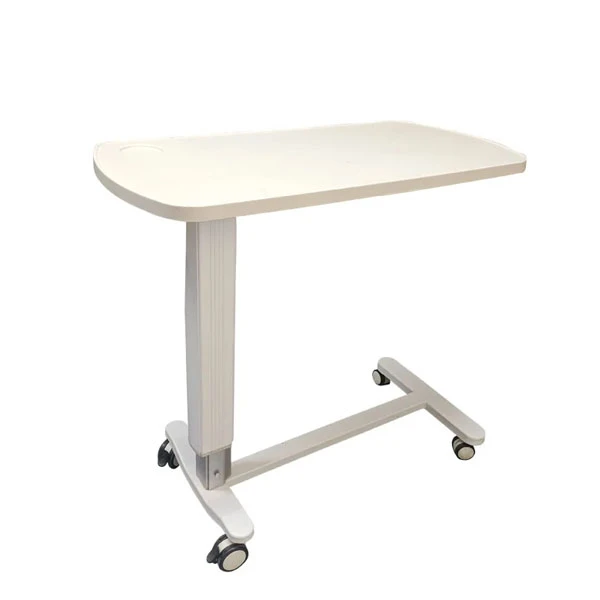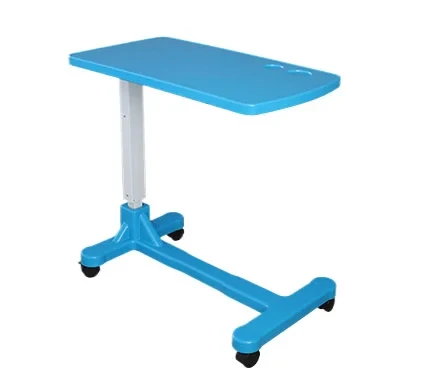
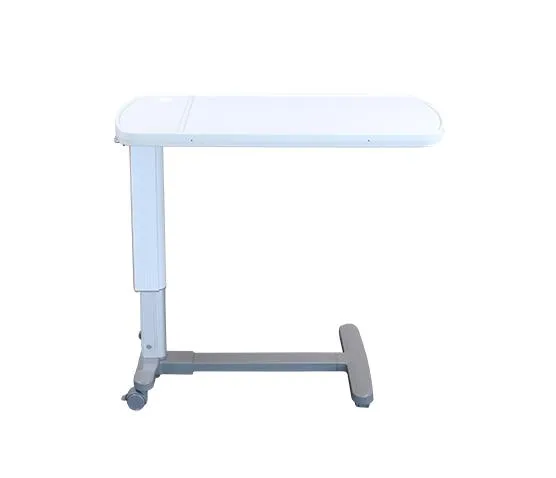
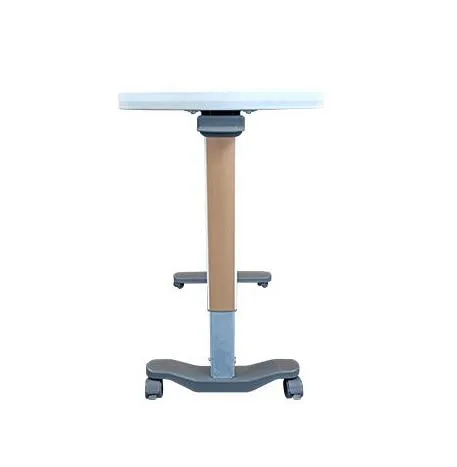
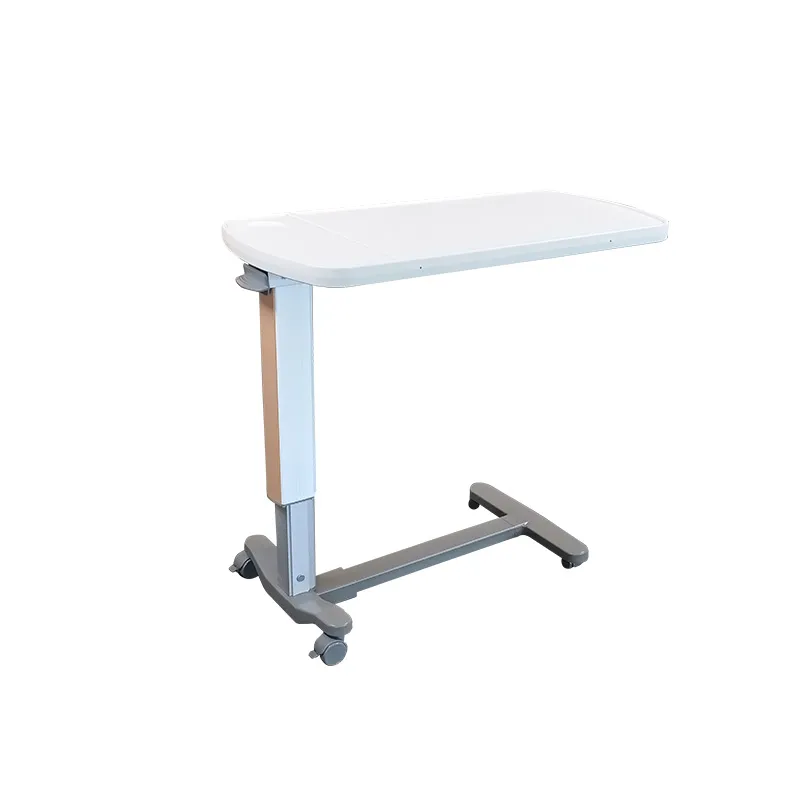
Mesa de cabeceira hospitalar ajustável PP para paciente ZF-BT022
Parâmetro técnico:
|
Tampo da mesa |
895*445mm |
|
Altura da mesa min. |
660 mm |
|
Altura máxima da mesa |
945 mm |
Configuração técnica:
|
Mola a gás |
1 conjunto |
|
Tampo de mesa PP |
1 peça |
|
Φ25mm Caster |
2 peças |
|
Φ50mm Caster |
2 peças |
|
Alça de ajuste de altura |
1 peça |
Controle de qualidade:
- Mola a gás: O mecanismo de mola a gás integrado à mesa de cabeceira hospitalar desempenha um papel fundamental no aprimoramento da funcionalidade e da segurança. Este design permite que o tampo da mesa seja ajustado suavemente e sem esforço a várias alturas, tornando-o altamente adaptável às necessidades específicas dos pacientes, estejam eles comendo, lendo ou usando dispositivos eletrônicos. O uso de uma mola a gás reduz o risco de movimentos bruscos, minimizando assim o potencial de ferimentos acidentais. Ele também permite que os pacientes, incluindo aqueles com força ou mobilidade limitadas, ajustem a mesa sozinhos sem precisar de assistência, promovendo uma maior sensação de independência. Esta incorporação cuidadosa de uma mola a gás no design de mesas de cabeceira destaca o foco no conforto e na segurança do paciente em ambientes de saúde.
- Material: A composição do material da mesa de cabeceira hospitalar contribui significativamente para sua durabilidade, segurança e facilidade de uso. O tampo da mesa é frequentemente feito de material PP (polipropileno), que é favorecido por suas propriedades leves, não tóxicas e fáceis de limpar, tornando-o ideal para um ambiente de saúde onde a higiene é primordial. Além disso, o corpo principal e a estrutura de suporte da mesa são normalmente construídos em liga de alumínio, o que fornece resistência e estabilidade, permanecendo leve o suficiente para manobrar. A liga de alumínio também é resistente à corrosão, o que é essencial em um ambiente hospitalar onde a mesa pode ser frequentemente limpa com vários desinfetantes. Juntos, esses materiais garantem que a mesa de cabeceira seja funcional e duradoura, capaz de suportar as rigorosas demandas do uso médico diário.
- Padrão de segurança: Hospital overbed table is designed and manufactured to meet stringent safety and quality standards, ensuring they are suitable for medical environments. They comply with the latest ISO 9001 and ISO 13485 standards, which are benchmarks for quality management systems and the specific requirements for medical devices, respectively. Additionally, these tables are certified by the CE marking, affirming that they meet EU safety, health, and environmental protection requirements. In the United States, they adhere to FDA regulations, ensuring that they are safe and effective for their intended use. Compliance with these standards not only guarantees the tables’ reliability and safety but also builds trust among healthcare providers and patients in the quality and safety of the equipment used in medical care.
Detalhe do acessório:
-
- Tampo da mesa: O tampo da mesa de cabeceira do hospital foi cuidadosamente projetado com a conveniência e a funcionalidade do paciente em mente. Feito de material PP (polipropileno) branco, ele oferece uma superfície limpa, não tóxica e resistente a manchas, fácil de manter e desinfetar, crucial para manter um ambiente estéril em hospitais. O design inclui recursos especializados, como uma área rebaixada para uso geral e um porta-copos embutido, aumentando sua utilidade. A seção rebaixada ajuda a manter itens como livros, dispositivos médicos ou utensílios de alimentação firmemente no lugar, minimizando o risco de eles escorregarem quando a mesa é movida ou ajustada. Além disso, o porta-copos integrado evita derramamentos, o que é particularmente importante em um ambiente de saúde para evitar acidentes e garantir que os líquidos sejam mantidos longe de dispositivos críticos e do paciente. Essa combinação de escolha de material e design funcional torna o tampo da mesa não apenas durável e higiênico, mas também altamente prático para as diversas necessidades dos pacientes do hospital.
- Rodízio: The mobility and stability of hospital overbed tables are significantly enhanced by their caster design, which features four omnidirectional wheels. This setup includes two larger casters with a diameter of 50mm and two smaller casters with a diameter of 25mm. The larger wheels are equipped with independent brakes, providing robust stopping power and ensuring the table remains securely in place when needed. This braking mechanism is crucial for maintaining safety, preventing the table from moving or shifting when patients use it for eating, reading, or supporting medical devices. The smaller wheels, while not braked, contribute to the table’s overall ease of maneuverability, allowing it to glide smoothly over various floor types within the hospital environment. This combination of differently sized wheels optimizes both the table’s mobility for repositioning and its stability when stationary, meeting the dynamic needs of a hospital setting.
- Base: The base of the hospital overbed table is thoughtfully designed with an aluminum alloy cover, which serves multiple crucial purposes in a healthcare environment. Aluminum alloy, known for its durability and resistance to corrosion, adds structural integrity and longevity to the table. The material’s smooth surface is particularly beneficial in hospital settings as it prevents the accumulation of dust and bacteria, crucial for maintaining a sterile environment. This feature makes the base much easier to clean and disinfect, a vital aspect in preventing hospital-acquired infections. The combination of aluminum alloy and its protective cover ensures that the table not only withstands frequent use and cleaning but also adheres to the high standards of hygiene required in medical settings, thereby safeguarding both patient and staff health.
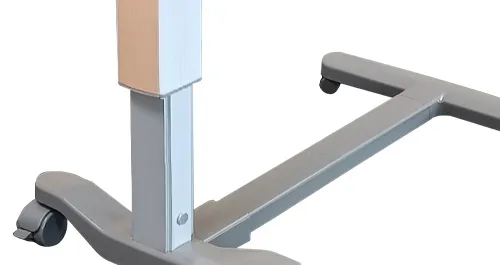
- Coluna de elevação: A coluna de elevação da mesa de cabeceira hospitalar é meticulosamente projetada usando liga de alumínio, o que melhora suas propriedades funcionais e higiênicas. Esta coluna apresenta um design em que a seção superior envolve a seção inferior, uma escolha estratégica que minimiza fendas e espaços onde bactérias poderiam se acumular. Tal configuração é altamente benéfica em um ambiente hospitalar onde prevenir a disseminação de patógenos é primordial. A liga de alumínio, conhecida por sua robustez e resistência à corrosão, garante que a coluna possa suportar ajustes frequentes e uso pesado típico em ambientes hospitalares. Além disso, as superfícies lisas da liga de alumínio são fáceis de limpar e desinfetar, o que é essencial para manter um ambiente estéril. Este design cuidadoso não apenas facilita a manutenção, mas também contribui significativamente para a higiene geral e a segurança da mesa de cabeceira hospitalar.
-
COLUNA DE ELEVAÇÃO
-
Coluna de suporte em liga de alumínio, a coluna superior define o design da coluna inferior, previne efetivamente o acúmulo de bactérias e é fácil de limpar.
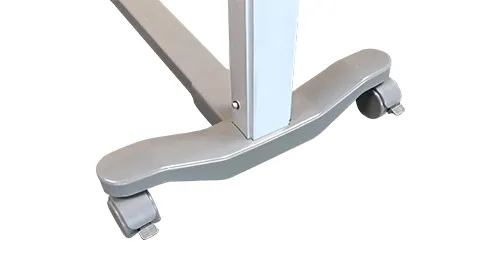
RODÍZIO
Quatro rodízios universais. Dois rodízios de 50 mm de diâmetro com freios independentes para melhor frenagem. Dois outros rodízios de 25 mm de diâmetro.
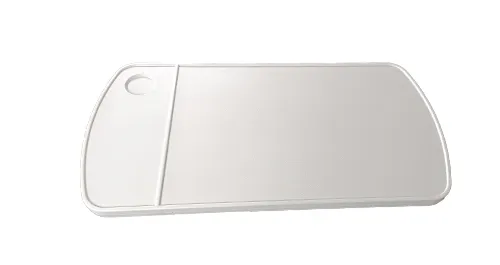
TAMPO DA MESA
Mesa de PP branca com design rebaixado para copos de água e áreas de uso principal.
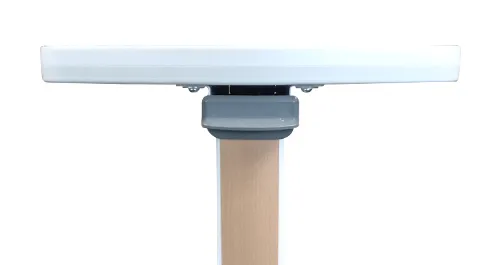
AJUSTE DE ALTURA
Ajuste a altura levantando a alça lateral ou pressionando o tampo da mesa. A faixa de ajuste é de 660 mm a 945 mm.
-
Height Adjustment Function and Operation Mechanism of PP Adjustable Hospital Moving Table
ZhaofaMed’s PP adjustable hospital overbed table redefines convenience in patient care through its precision-engineered height adjustment system, a core feature that enhances its versatility as a hospital moving table. Designed to adapt to diverse patient needs, this table merges intuitive operation with robust mechanics, making it an essential tool in wards, rehabilitation centers, and home care settings.
The height adjustment range is meticulously calibrated to accommodate various scenarios: from 70cm (ideal for seated patients) to 110cm (suitable for standing or semi-recumbent use). This flexibility ensures compatibility with different bed heights, wheelchairs, and treatment protocols, allowing patients to engage in activities like dining, reading, or medical procedures without leaving their beds. As a hospital moving table, this adaptability transforms static care spaces into dynamic environments, supporting both independence and clinical efficiency.
At the heart of its operation is a gas spring-assisted mechanism, chosen for its smooth, silent performance. The system uses compressed gas to counterbalance the table’s weight, enabling effortless height adjustments with minimal force—even for patients with limited upper body strength. A large, ergonomically positioned release lever (located under the table edge) activates the mechanism; squeezing it unlocks the height lock, allowing users to raise or lower the table to their desired position. Releasing the lever engages a safety lock, securing the table firmly in place to prevent unintended movement—a critical safety feature in busy healthcare settings.
The mechanism’s durability is reinforced by high-grade materials: the adjustment column is crafted from anodized aluminum, resistant to corrosion and wear, while the PP tabletop (smooth, non-porous) adds lightweight stability. This combination ensures the hospital's moving table maintains consistent performance over thousands of adjustments, withstanding frequent use in high-traffic areas.
For caregivers, the intuitive design reduces training time and streamlines patient assistance, as adjustments can be made quickly during rounds. For patients, the ability to control table height fosters a sense of autonomy, enhancing their overall care experience. When paired with the table’s smooth-rolling casters (a hallmark of a functional hospital moving table), the height adjustment system creates a versatile solution that adapts seamlessly to evolving care needs.
In essence, ZhaofaMed’s focus on user-centric engineering transforms this overbed table into more than a utility—it becomes a tool that empowers patients and simplifies care, with height adjustment at its core. This attention to detail solidifies its role as a leading hospital moving table in modern healthcare environments.
Boosting Patient Independence and Care Efficiency: The Role of Adjustable Hospital Moving Tables
ZhaofaMed’s adjustable hospital overbed table, as a versatile hospital moving table, serves as a catalyst for enhancing patient autonomy while streamlining caregiver workflows. Its design prioritizes both self-sufficiency for patients and operational efficiency for staff, making it a transformative tool in healthcare settings.
For patients, the table’s adjustability fosters newfound independence. With height ranges from 70cm to 110cm and smooth angle adjustments (0°–30°), individuals can easily position the table to suit their activities—whether dining, reading, using a tablet, or managing personal items—without relying on assistance. This autonomy is particularly impactful for post-surgery or rehabilitation patients, as it restores a sense of control over daily routines, boosting mental well-being and accelerating recovery. The hospital's moving table’s lightweight PP top (4kg) and easy-glide casters allow patients to reposition it independently, further reducing dependency on staff for minor adjustments.
Caregivers benefit from significant efficiency gains. The table’s intuitive design minimizes the need for constant intervention: its one-touch height lock and stable base eliminate time spent readjusting surfaces during meal times or medication administration. The spacious 80cm×45cm tabletop, featuring built-in cup holders and a recessed tray, organizes essentials (water, meds, utensils) in one place, reducing trips to fetch items—a critical advantage in busy wards. As a hospital moving table, its maneuverability (via 360° rotating casters with brakes) allows seamless movement between beds, enabling staff to serve multiple patients with minimal effort.
Additionally, the table’s compatibility with various care scenarios—from acute wards to home care—enhances workflow consistency. Its durable aluminum frame and easy-to-clean surface (resistant to disinfectants) reduce maintenance time, ensuring it remains functional round-the-clock. For patients requiring frequent monitoring, the table doubles as a stable surface for medical devices (e.g., blood pressure monitors), consolidating care tools and cutting down on setup time.
By bridging patient empowerment and operational efficiency, this hospital's moving table transcends its utility as a mere furniture piece. It becomes a key contributor to better care outcomes—empowering patients to reclaim independence while enabling caregivers to focus on high-priority tasks. In essence, it redefines the role of assistive equipment in fostering a more efficient, patient-centric healthcare environment.
hospital moving table