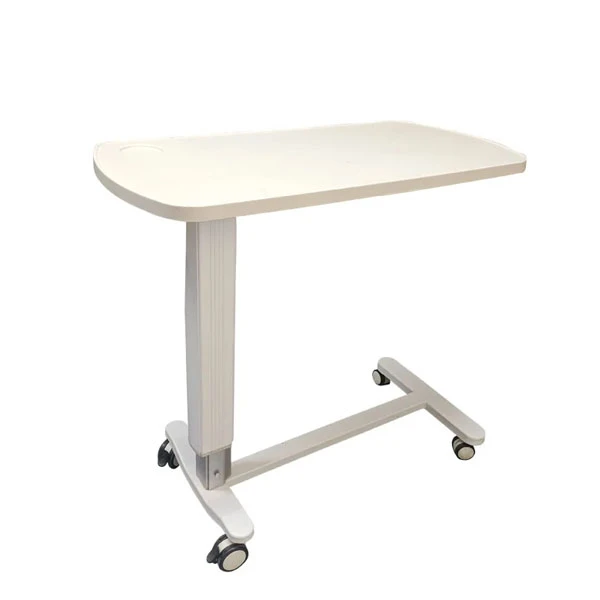
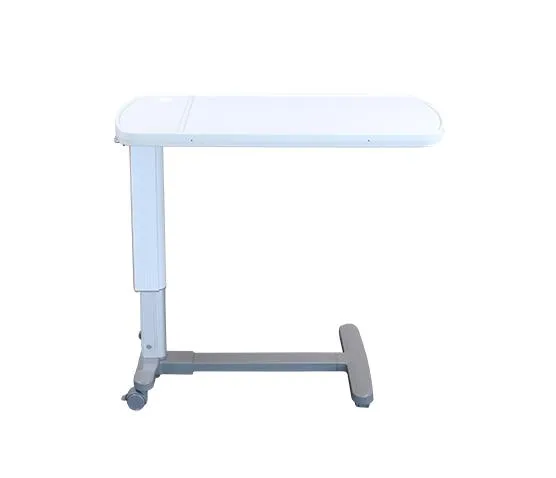
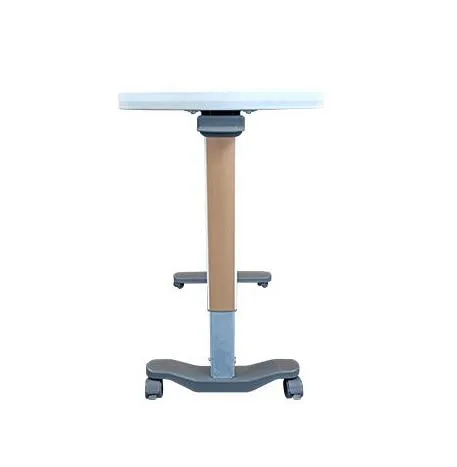
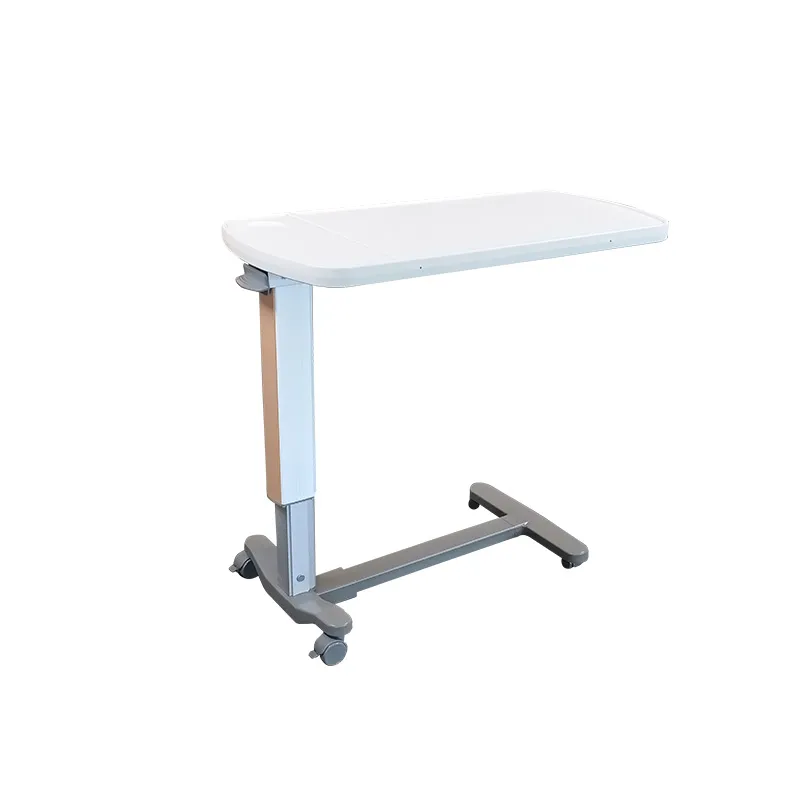
PP Meja Overbed Hospital Boleh Laras Untuk Pesakit ZF-BT022
Parameter Teknikal:
|
Atas Meja |
895*445mm |
|
Ketinggian Meja Min |
660mm |
|
Ketinggian Meja Maks |
945mm |
Konfigurasi Teknikal:
|
Mata Air Gas |
1set |
|
Atas Meja PP |
1pc |
|
Φ25mm Caster |
2pcs |
|
Φ50mm Caster |
2pcs |
|
Pemegang Pelarasan Tinggi |
1pc |
Kawalan Kualiti:
- Spring Gas: Mekanisme spring gas yang disepadukan ke dalam meja overbed hospital memainkan peranan penting dalam meningkatkan kedua-dua fungsi dan keselamatan. Reka bentuk ini membolehkan permukaan meja dilaraskan dengan lancar dan mudah pada pelbagai ketinggian, menjadikannya sangat mudah disesuaikan dengan keperluan khusus pesakit, sama ada mereka sedang makan, membaca atau menggunakan peranti elektronik. Penggunaan spring gas mengurangkan risiko pergerakan secara tiba-tiba, dengan itu meminimumkan potensi kecederaan akibat kemalangan. Ia juga membolehkan pesakit, termasuk mereka yang mempunyai kekuatan atau mobiliti yang terhad, menyesuaikan meja sendiri tanpa memerlukan bantuan, menggalakkan rasa berdikari yang lebih besar. Penggabungan spring gas yang bernas ini ke dalam reka bentuk meja atas katil menyerlahkan tumpuan pada keselesaan dan keselamatan pesakit dalam tetapan penjagaan kesihatan.
- Bahan: Komposisi bahan meja atas katil hospital menyumbang dengan ketara kepada ketahanan, keselamatan dan kemudahan penggunaannya. Bahagian atas meja selalunya diperbuat daripada bahan PP (polipropilena), yang digemari kerana sifatnya yang ringan, tidak toksik dan mudah dibersihkan, menjadikannya sesuai untuk persekitaran penjagaan kesihatan yang menjaga kebersihan adalah yang paling utama. Selain itu, badan utama dan struktur sokongan meja biasanya dibina daripada aloi aluminium, yang memberikan kekuatan dan kestabilan sambil kekal cukup ringan untuk bergerak. Aloi aluminium juga tahan terhadap kakisan, yang penting dalam persekitaran hospital di mana meja mungkin kerap dibersihkan dengan pelbagai pembasmi kuman. Bersama-sama, bahan-bahan ini memastikan bahawa meja atas katil berfungsi dan tahan lama, mampu menahan permintaan ketat penggunaan perubatan harian.
- Standard Keselamatan: Hospital overbed table is designed and manufactured to meet stringent safety and quality standards, ensuring they are suitable for medical environments. They comply with the latest ISO 9001 and ISO 13485 standards, which are benchmarks for quality management systems and the specific requirements for medical devices, respectively. Additionally, these tables are certified by the CE marking, affirming that they meet EU safety, health, and environmental protection requirements. In the United States, they adhere to FDA regulations, ensuring that they are safe and effective for their intended use. Compliance with these standards not only guarantees the tables’ reliability and safety but also builds trust among healthcare providers and patients in the quality and safety of the equipment used in medical care.
Butiran Aksesori:
-
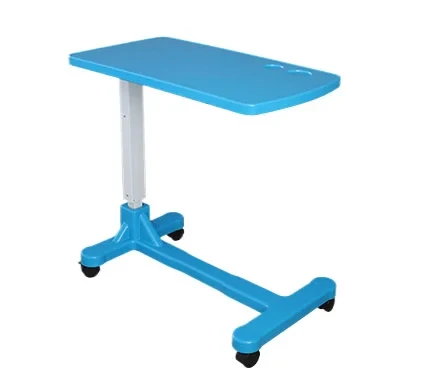
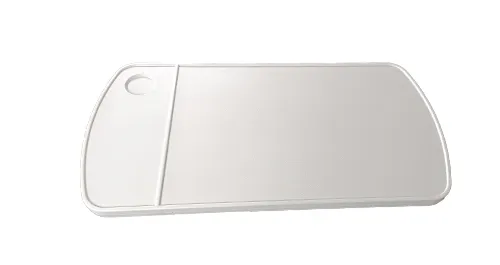
- Atas Meja: Bahagian atas meja meja atas katil hospital direka dengan teliti dengan mengambil kira kemudahan dan fungsi pesakit. Diperbuat daripada bahan PP (polipropilena) putih, ia menawarkan permukaan yang bersih, tidak toksik dan tahan noda yang mudah diselenggara dan disinfeksi, penting untuk mengekalkan persekitaran steril di hospital. Reka bentuk termasuk ciri khusus seperti kawasan ceruk untuk kegunaan umum dan pemegang cawan terbina dalam, meningkatkan utilitinya. Bahagian ceruk membantu menyimpan item seperti buku, peranti perubatan atau peralatan makan dengan selamat di tempatnya, meminimumkan risiko ia tergelincir apabila meja dialihkan atau dilaraskan. Selain itu, pemegang cawan bersepadu menghalang tumpahan, yang amat penting dalam persekitaran penjagaan kesihatan untuk mengelakkan kemalangan dan memastikan cecair dijauhkan daripada peranti kritikal dan pesakit. Gabungan pilihan bahan dan reka bentuk berfungsi ini menjadikan permukaan meja bukan sahaja tahan lasak dan bersih tetapi juga sangat praktikal untuk pelbagai keperluan pesakit hospital.
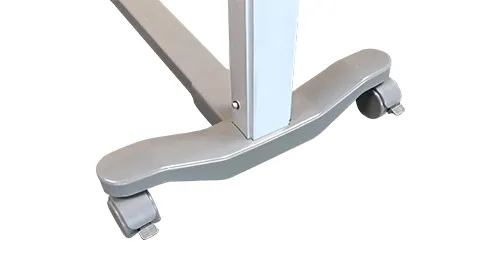
- kastor: The mobility and stability of hospital overbed tables are significantly enhanced by their caster design, which features four omnidirectional wheels. This setup includes two larger casters with a diameter of 50mm and two smaller casters with a diameter of 25mm. The larger wheels are equipped with independent brakes, providing robust stopping power and ensuring the table remains securely in place when needed. This braking mechanism is crucial for maintaining safety, preventing the table from moving or shifting when patients use it for eating, reading, or supporting medical devices. The smaller wheels, while not braked, contribute to the table’s overall ease of maneuverability, allowing it to glide smoothly over various floor types within the hospital environment. This combination of differently sized wheels optimizes both the table’s mobility for repositioning and its stability when stationary, meeting the dynamic needs of a hospital setting.
- Pangkalan: The base of the hospital overbed table is thoughtfully designed with an aluminum alloy cover, which serves multiple crucial purposes in a healthcare environment. Aluminum alloy, known for its durability and resistance to corrosion, adds structural integrity and longevity to the table. The material’s smooth surface is particularly beneficial in hospital settings as it prevents the accumulation of dust and bacteria, crucial for maintaining a sterile environment. This feature makes the base much easier to clean and disinfect, a vital aspect in preventing hospital-acquired infections. The combination of aluminum alloy and its protective cover ensures that the table not only withstands frequent use and cleaning but also adheres to the high standards of hygiene required in medical settings, thereby safeguarding both patient and staff health.
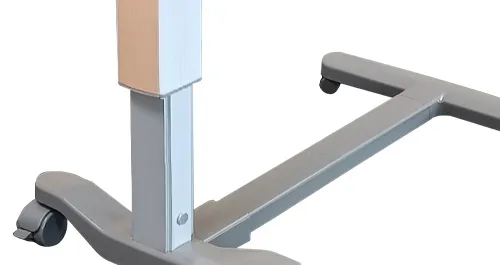
- Lajur Angkat: Lajur angkat meja atas katil hospital direka bentuk dengan teliti menggunakan aloi aluminium, yang meningkatkan kedua-dua ciri fungsi dan kebersihannya. Lajur ini menampilkan reka bentuk di mana bahagian atas membungkus bahagian bawah, pilihan strategik yang meminimumkan celah dan celah tempat bakteria mungkin terkumpul. Konfigurasi sedemikian sangat berfaedah dalam persekitaran hospital di mana mencegah penyebaran patogen adalah yang paling penting. Aloi aluminium, yang terkenal dengan kekukuhan dan ketahanan terhadap kakisan, memastikan lajur boleh menahan pelarasan yang kerap dan penggunaan berat yang biasa dalam persekitaran hospital. Selain itu, permukaan licin aloi aluminium mudah dibersihkan dan disinfeksi, yang penting untuk mengekalkan persekitaran yang steril. Reka bentuk yang bernas ini bukan sahaja memudahkan penyelenggaraan yang mudah tetapi juga menyumbang dengan ketara kepada kebersihan dan keselamatan keseluruhan meja atas katil hospital.
-
LAJU MENGANGKAT
-
Lajur penyokong aloi aluminium, lajur atas menetapkan reka bentuk lajur yang lebih rendah, berkesan menghalang pengumpulan bakteria, mudah dibersihkan.
CASTER
Empat kastor universal. Dua kastor berdiameter 50mm dengan brek bebas untuk brek yang lebih baik. Dua pemutus diameter 25mm lain.
ATAS MEJA
Desktop PP putih dengan reka bentuk ceruk untuk cawan air dan kawasan kegunaan utama.
PELARASAN TINGGI
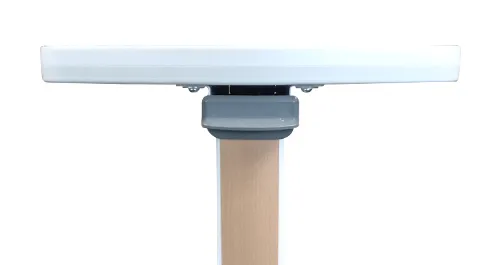
Laraskan ketinggian dengan mengangkat pemegang sisi atau menekan bahagian atas meja. Julat pelarasan ialah 660mm-945mm.
-
Height Adjustment Function and Operation Mechanism of PP Adjustable Hospital Moving Table
ZhaofaMed’s PP adjustable hospital overbed table redefines convenience in patient care through its precision-engineered height adjustment system, a core feature that enhances its versatility as a hospital moving table. Designed to adapt to diverse patient needs, this table merges intuitive operation with robust mechanics, making it an essential tool in wards, rehabilitation centers, and home care settings.
The height adjustment range is meticulously calibrated to accommodate various scenarios: from 70cm (ideal for seated patients) to 110cm (suitable for standing or semi-recumbent use). This flexibility ensures compatibility with different bed heights, wheelchairs, and treatment protocols, allowing patients to engage in activities like dining, reading, or medical procedures without leaving their beds. As a hospital moving table, this adaptability transforms static care spaces into dynamic environments, supporting both independence and clinical efficiency.
At the heart of its operation is a gas spring-assisted mechanism, chosen for its smooth, silent performance. The system uses compressed gas to counterbalance the table’s weight, enabling effortless height adjustments with minimal force—even for patients with limited upper body strength. A large, ergonomically positioned release lever (located under the table edge) activates the mechanism; squeezing it unlocks the height lock, allowing users to raise or lower the table to their desired position. Releasing the lever engages a safety lock, securing the table firmly in place to prevent unintended movement—a critical safety feature in busy healthcare settings.
The mechanism’s durability is reinforced by high-grade materials: the adjustment column is crafted from anodized aluminum, resistant to corrosion and wear, while the PP tabletop (smooth, non-porous) adds lightweight stability. This combination ensures the hospital's moving table maintains consistent performance over thousands of adjustments, withstanding frequent use in high-traffic areas.
For caregivers, the intuitive design reduces training time and streamlines patient assistance, as adjustments can be made quickly during rounds. For patients, the ability to control table height fosters a sense of autonomy, enhancing their overall care experience. When paired with the table’s smooth-rolling casters (a hallmark of a functional hospital moving table), the height adjustment system creates a versatile solution that adapts seamlessly to evolving care needs.
In essence, ZhaofaMed’s focus on user-centric engineering transforms this overbed table into more than a utility—it becomes a tool that empowers patients and simplifies care, with height adjustment at its core. This attention to detail solidifies its role as a leading hospital moving table in modern healthcare environments.
Boosting Patient Independence and Care Efficiency: The Role of Adjustable Hospital Moving Tables
ZhaofaMed’s adjustable hospital overbed table, as a versatile hospital moving table, serves as a catalyst for enhancing patient autonomy while streamlining caregiver workflows. Its design prioritizes both self-sufficiency for patients and operational efficiency for staff, making it a transformative tool in healthcare settings.
For patients, the table’s adjustability fosters newfound independence. With height ranges from 70cm to 110cm and smooth angle adjustments (0°–30°), individuals can easily position the table to suit their activities—whether dining, reading, using a tablet, or managing personal items—without relying on assistance. This autonomy is particularly impactful for post-surgery or rehabilitation patients, as it restores a sense of control over daily routines, boosting mental well-being and accelerating recovery. The hospital's moving table’s lightweight PP top (4kg) and easy-glide casters allow patients to reposition it independently, further reducing dependency on staff for minor adjustments.
Caregivers benefit from significant efficiency gains. The table’s intuitive design minimizes the need for constant intervention: its one-touch height lock and stable base eliminate time spent readjusting surfaces during meal times or medication administration. The spacious 80cm×45cm tabletop, featuring built-in cup holders and a recessed tray, organizes essentials (water, meds, utensils) in one place, reducing trips to fetch items—a critical advantage in busy wards. As a hospital moving table, its maneuverability (via 360° rotating casters with brakes) allows seamless movement between beds, enabling staff to serve multiple patients with minimal effort.
Additionally, the table’s compatibility with various care scenarios—from acute wards to home care—enhances workflow consistency. Its durable aluminum frame and easy-to-clean surface (resistant to disinfectants) reduce maintenance time, ensuring it remains functional round-the-clock. For patients requiring frequent monitoring, the table doubles as a stable surface for medical devices (e.g., blood pressure monitors), consolidating care tools and cutting down on setup time.
By bridging patient empowerment and operational efficiency, this hospital's moving table transcends its utility as a mere furniture piece. It becomes a key contributor to better care outcomes—empowering patients to reclaim independence while enabling caregivers to focus on high-priority tasks. In essence, it redefines the role of assistive equipment in fostering a more efficient, patient-centric healthcare environment.
hospital moving table