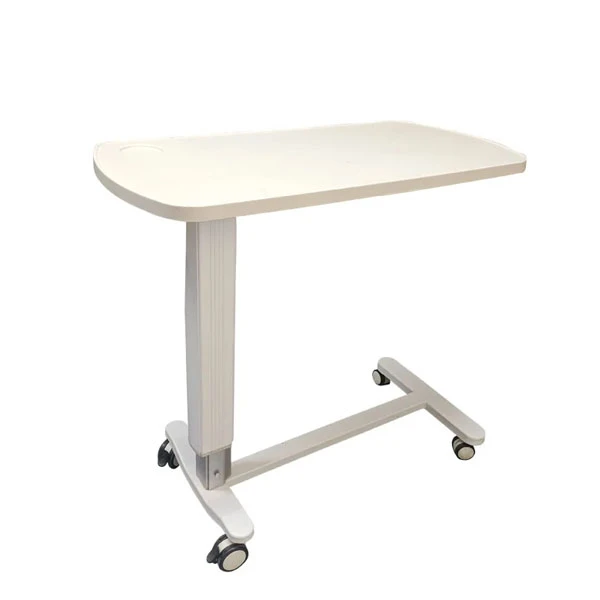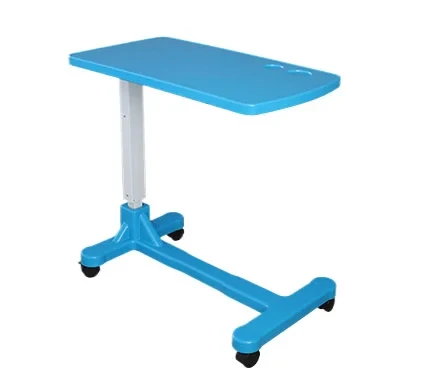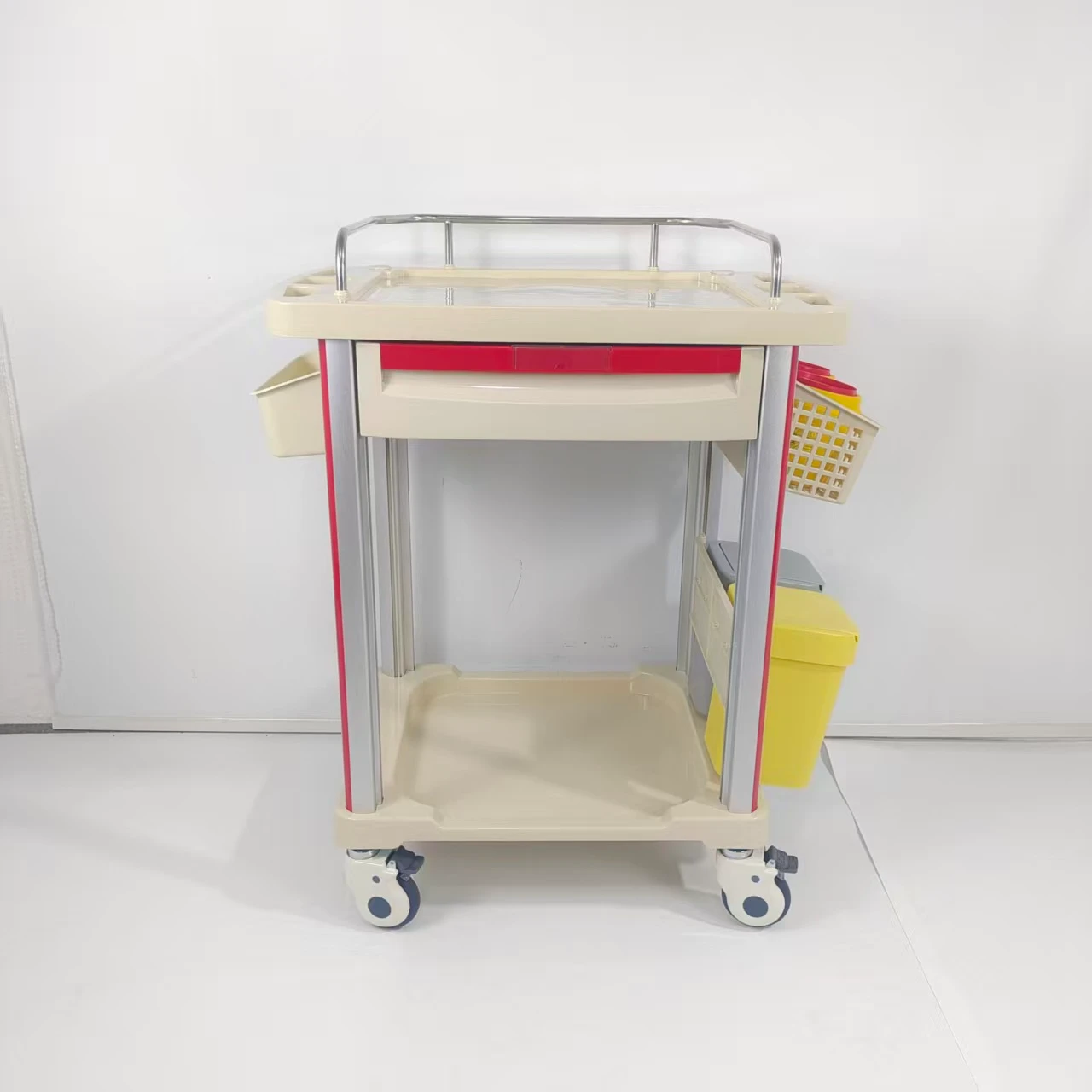
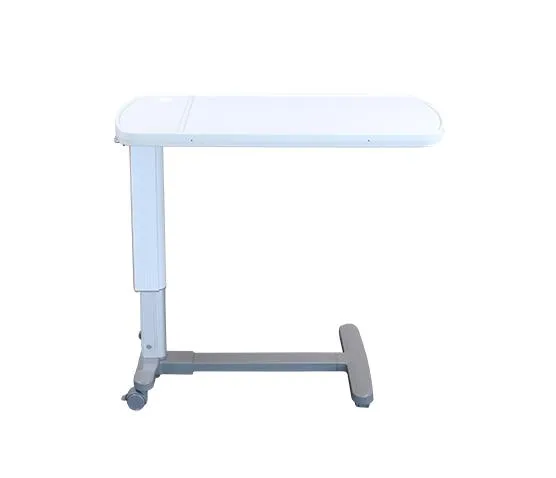
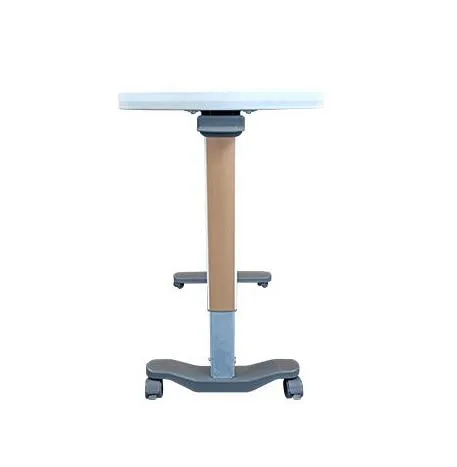
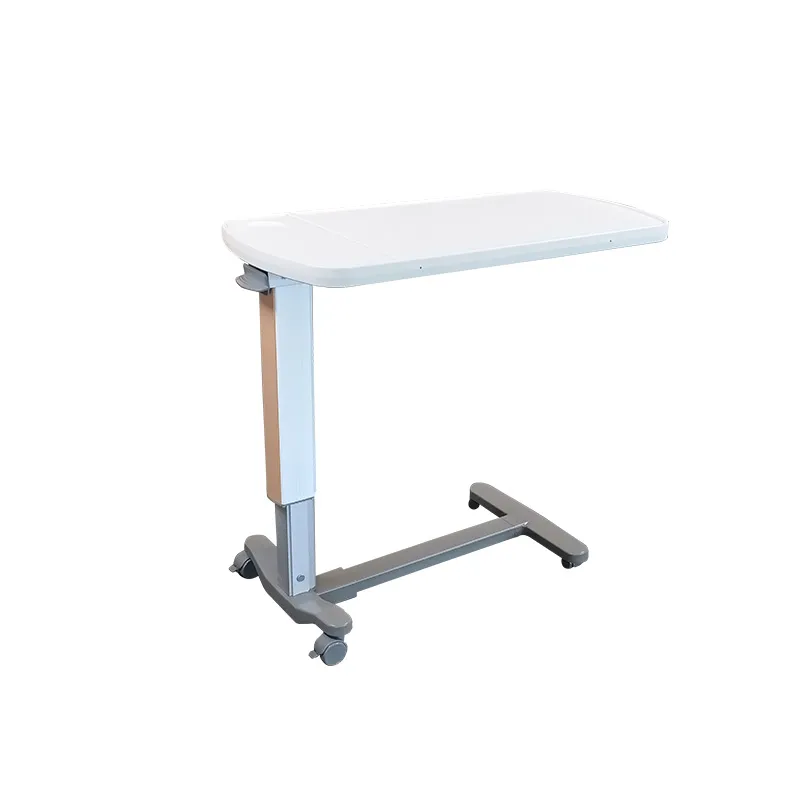
Bàn giường bệnh nhân PP có thể điều chỉnh ZF-BT022
Thông số kỹ thuật:
|
Mặt bàn |
895*445mm |
|
Chiều cao bàn tối thiểu |
660mm |
|
Chiều cao bàn tối đa |
945mm |
Cấu hình kỹ thuật:
|
Lò xo khí |
1 bộ |
|
Mặt bàn PP |
1 cái |
|
Φ25mm Caster |
2 cái |
|
Φ50mm Caster |
2 cái |
|
Tay cầm điều chỉnh độ cao |
1 cái |
Kiểm soát chất lượng:
- Lò xo khí: Cơ chế lò xo khí tích hợp vào bàn trên giường bệnh viện đóng vai trò then chốt trong việc tăng cường cả chức năng và độ an toàn. Thiết kế này cho phép mặt bàn được điều chỉnh trơn tru và dễ dàng theo nhiều độ cao khác nhau, giúp mặt bàn có khả năng thích ứng cao với nhu cầu cụ thể của bệnh nhân, cho dù họ đang ăn, đọc sách hay sử dụng thiết bị điện tử. Việc sử dụng lò xo khí làm giảm nguy cơ chuyển động đột ngột, do đó giảm thiểu khả năng xảy ra thương tích do tai nạn. Nó cũng cho phép bệnh nhân, bao gồm cả những người có sức khỏe hoặc khả năng vận động hạn chế, tự điều chỉnh bàn mà không cần hỗ trợ, thúc đẩy cảm giác độc lập hơn. Việc kết hợp chu đáo lò xo khí vào thiết kế của bàn trên giường làm nổi bật sự tập trung vào sự thoải mái và an toàn của bệnh nhân trong môi trường chăm sóc sức khỏe.
- Vật liệu: Thành phần vật liệu của bàn trên giường bệnh viện góp phần đáng kể vào độ bền, độ an toàn và dễ sử dụng của chúng. Mặt bàn thường được làm từ vật liệu PP (polypropylene), được ưa chuộng vì đặc tính nhẹ, không độc hại và dễ vệ sinh, khiến nó trở nên lý tưởng cho môi trường chăm sóc sức khỏe, nơi vệ sinh là tối quan trọng. Ngoài ra, thân chính và cấu trúc hỗ trợ của bàn thường được chế tạo từ hợp kim nhôm, mang lại độ bền và độ ổn định trong khi vẫn đủ nhẹ để di chuyển. Hợp kim nhôm cũng có khả năng chống ăn mòn, điều này rất cần thiết trong môi trường bệnh viện, nơi bàn có thể thường xuyên được vệ sinh bằng nhiều chất khử trùng khác nhau. Cùng nhau, các vật liệu này đảm bảo rằng bàn trên giường vừa có chức năng vừa bền lâu, có khả năng chịu được những yêu cầu khắt khe của việc sử dụng y tế hàng ngày.
- Tiêu chuẩn an toàn: Hospital overbed table is designed and manufactured to meet stringent safety and quality standards, ensuring they are suitable for medical environments. They comply with the latest ISO 9001 and ISO 13485 standards, which are benchmarks for quality management systems and the specific requirements for medical devices, respectively. Additionally, these tables are certified by the CE marking, affirming that they meet EU safety, health, and environmental protection requirements. In the United States, they adhere to FDA regulations, ensuring that they are safe and effective for their intended use. Compliance with these standards not only guarantees the tables’ reliability and safety but also builds trust among healthcare providers and patients in the quality and safety of the equipment used in medical care.
Chi tiết phụ kiện:
-
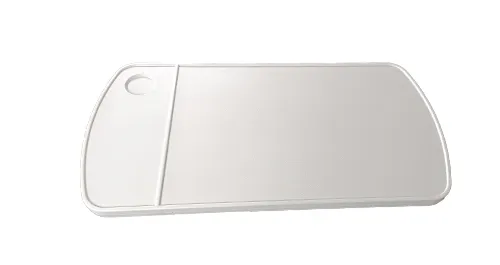
- Mặt bàn: Mặt bàn của bàn trên giường bệnh viện được thiết kế chu đáo, chú trọng đến sự tiện lợi và chức năng của bệnh nhân. Được làm từ vật liệu PP (polypropylene) màu trắng, mặt bàn sạch, không độc hại và chống ố, dễ bảo trì và khử trùng, rất quan trọng để duy trì môi trường vô trùng trong bệnh viện. Thiết kế bao gồm các tính năng chuyên dụng như khu vực lõm để sử dụng chung và giá để cốc tích hợp, tăng cường tiện ích của nó. Phần lõm giúp giữ các vật dụng như sách, thiết bị y tế hoặc đồ dùng ăn uống cố định tại chỗ, giảm thiểu nguy cơ chúng trượt ra khi di chuyển hoặc điều chỉnh bàn. Ngoài ra, giá để cốc tích hợp ngăn ngừa đổ, điều này đặc biệt quan trọng trong môi trường chăm sóc sức khỏe để tránh tai nạn và đảm bảo chất lỏng tránh xa các thiết bị quan trọng và bệnh nhân. Sự kết hợp giữa lựa chọn vật liệu và thiết kế chức năng này làm cho mặt bàn không chỉ bền và hợp vệ sinh mà còn rất thiết thực cho các nhu cầu đa dạng của bệnh nhân trong bệnh viện.
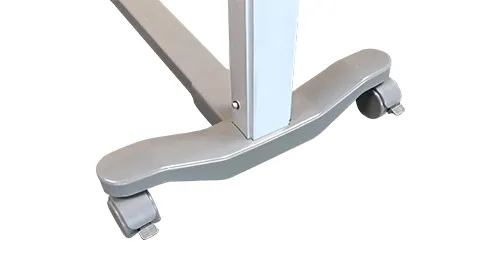
- Người đúc: The mobility and stability of hospital overbed tables are significantly enhanced by their caster design, which features four omnidirectional wheels. This setup includes two larger casters with a diameter of 50mm and two smaller casters with a diameter of 25mm. The larger wheels are equipped with independent brakes, providing robust stopping power and ensuring the table remains securely in place when needed. This braking mechanism is crucial for maintaining safety, preventing the table from moving or shifting when patients use it for eating, reading, or supporting medical devices. The smaller wheels, while not braked, contribute to the table’s overall ease of maneuverability, allowing it to glide smoothly over various floor types within the hospital environment. This combination of differently sized wheels optimizes both the table’s mobility for repositioning and its stability when stationary, meeting the dynamic needs of a hospital setting.
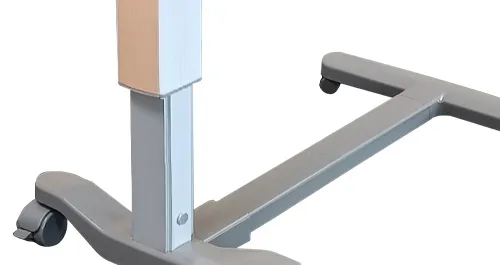
- Căn cứ: The base of the hospital overbed table is thoughtfully designed with an aluminum alloy cover, which serves multiple crucial purposes in a healthcare environment. Aluminum alloy, known for its durability and resistance to corrosion, adds structural integrity and longevity to the table. The material’s smooth surface is particularly beneficial in hospital settings as it prevents the accumulation of dust and bacteria, crucial for maintaining a sterile environment. This feature makes the base much easier to clean and disinfect, a vital aspect in preventing hospital-acquired infections. The combination of aluminum alloy and its protective cover ensures that the table not only withstands frequent use and cleaning but also adheres to the high standards of hygiene required in medical settings, thereby safeguarding both patient and staff health.
- Cột nâng: Cột nâng của bàn kê giường bệnh viện được thiết kế tỉ mỉ bằng hợp kim nhôm, giúp tăng cường cả tính năng chức năng và vệ sinh. Cột này có thiết kế phần trên bao bọc phần dưới, một lựa chọn chiến lược giúp giảm thiểu các khe hở và khoảng trống mà vi khuẩn có thể tích tụ. Cấu hình như vậy rất có lợi trong môi trường bệnh viện, nơi ngăn ngừa sự lây lan của mầm bệnh là tối quan trọng. Hợp kim nhôm, được biết đến với độ bền và khả năng chống ăn mòn, đảm bảo cột có thể chịu được các điều chỉnh thường xuyên và sử dụng nhiều trong môi trường bệnh viện. Ngoài ra, bề mặt nhẵn của hợp kim nhôm dễ vệ sinh và khử trùng, điều này rất cần thiết để duy trì môi trường vô trùng. Thiết kế chu đáo này không chỉ giúp bảo trì dễ dàng mà còn góp phần đáng kể vào vệ sinh và an toàn tổng thể của bàn kê giường bệnh viện.
-
CỘT NÂNG
-
Cột đỡ bằng hợp kim nhôm, cột trên thiết kế cột dưới, ngăn ngừa vi khuẩn tích tụ hiệu quả, dễ vệ sinh.
CASTER
Bốn bánh xe đa năng. Hai bánh xe đường kính 50mm có phanh độc lập để phanh tốt hơn. Hai bánh xe đường kính 25mm khác.
MẶT BÀN
Mặt bàn PP màu trắng có thiết kế lõm để đựng cốc nước và khu vực sử dụng chính.
ĐIỀU CHỈNH CHIỀU CAO
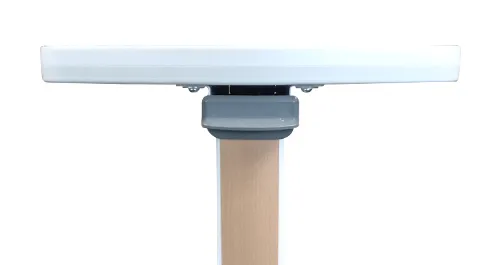
Điều chỉnh chiều cao bằng cách nâng tay cầm bên hoặc nhấn vào mặt bàn. Phạm vi điều chỉnh là 660mm-945mm.
-
Height Adjustment Function and Operation Mechanism of PP Adjustable Hospital Moving Table
ZhaofaMed’s PP adjustable hospital overbed table redefines convenience in patient care through its precision-engineered height adjustment system, a core feature that enhances its versatility as a hospital moving table. Designed to adapt to diverse patient needs, this table merges intuitive operation with robust mechanics, making it an essential tool in wards, rehabilitation centers, and home care settings.
The height adjustment range is meticulously calibrated to accommodate various scenarios: from 70cm (ideal for seated patients) to 110cm (suitable for standing or semi-recumbent use). This flexibility ensures compatibility with different bed heights, wheelchairs, and treatment protocols, allowing patients to engage in activities like dining, reading, or medical procedures without leaving their beds. As a hospital moving table, this adaptability transforms static care spaces into dynamic environments, supporting both independence and clinical efficiency.
At the heart of its operation is a gas spring-assisted mechanism, chosen for its smooth, silent performance. The system uses compressed gas to counterbalance the table’s weight, enabling effortless height adjustments with minimal force—even for patients with limited upper body strength. A large, ergonomically positioned release lever (located under the table edge) activates the mechanism; squeezing it unlocks the height lock, allowing users to raise or lower the table to their desired position. Releasing the lever engages a safety lock, securing the table firmly in place to prevent unintended movement—a critical safety feature in busy healthcare settings.
The mechanism’s durability is reinforced by high-grade materials: the adjustment column is crafted from anodized aluminum, resistant to corrosion and wear, while the PP tabletop (smooth, non-porous) adds lightweight stability. This combination ensures the hospital's moving table maintains consistent performance over thousands of adjustments, withstanding frequent use in high-traffic areas.
For caregivers, the intuitive design reduces training time and streamlines patient assistance, as adjustments can be made quickly during rounds. For patients, the ability to control table height fosters a sense of autonomy, enhancing their overall care experience. When paired with the table’s smooth-rolling casters (a hallmark of a functional hospital moving table), the height adjustment system creates a versatile solution that adapts seamlessly to evolving care needs.
In essence, ZhaofaMed’s focus on user-centric engineering transforms this overbed table into more than a utility—it becomes a tool that empowers patients and simplifies care, with height adjustment at its core. This attention to detail solidifies its role as a leading hospital moving table in modern healthcare environments.
Boosting Patient Independence and Care Efficiency: The Role of Adjustable Hospital Moving Tables
ZhaofaMed’s adjustable hospital overbed table, as a versatile hospital moving table, serves as a catalyst for enhancing patient autonomy while streamlining caregiver workflows. Its design prioritizes both self-sufficiency for patients and operational efficiency for staff, making it a transformative tool in healthcare settings.
For patients, the table’s adjustability fosters newfound independence. With height ranges from 70cm to 110cm and smooth angle adjustments (0°–30°), individuals can easily position the table to suit their activities—whether dining, reading, using a tablet, or managing personal items—without relying on assistance. This autonomy is particularly impactful for post-surgery or rehabilitation patients, as it restores a sense of control over daily routines, boosting mental well-being and accelerating recovery. The hospital's moving table’s lightweight PP top (4kg) and easy-glide casters allow patients to reposition it independently, further reducing dependency on staff for minor adjustments.
Caregivers benefit from significant efficiency gains. The table’s intuitive design minimizes the need for constant intervention: its one-touch height lock and stable base eliminate time spent readjusting surfaces during meal times or medication administration. The spacious 80cm×45cm tabletop, featuring built-in cup holders and a recessed tray, organizes essentials (water, meds, utensils) in one place, reducing trips to fetch items—a critical advantage in busy wards. As a hospital moving table, its maneuverability (via 360° rotating casters with brakes) allows seamless movement between beds, enabling staff to serve multiple patients with minimal effort.
Additionally, the table’s compatibility with various care scenarios—from acute wards to home care—enhances workflow consistency. Its durable aluminum frame and easy-to-clean surface (resistant to disinfectants) reduce maintenance time, ensuring it remains functional round-the-clock. For patients requiring frequent monitoring, the table doubles as a stable surface for medical devices (e.g., blood pressure monitors), consolidating care tools and cutting down on setup time.
By bridging patient empowerment and operational efficiency, this hospital's moving table transcends its utility as a mere furniture piece. It becomes a key contributor to better care outcomes—empowering patients to reclaim independence while enabling caregivers to focus on high-priority tasks. In essence, it redefines the role of assistive equipment in fostering a more efficient, patient-centric healthcare environment.
hospital moving table