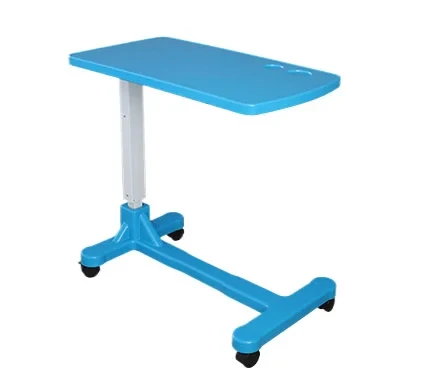
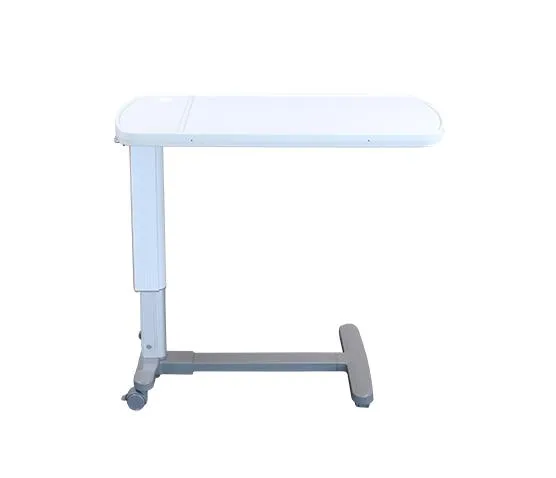
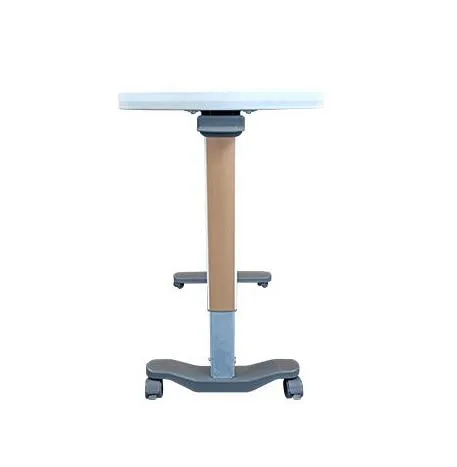
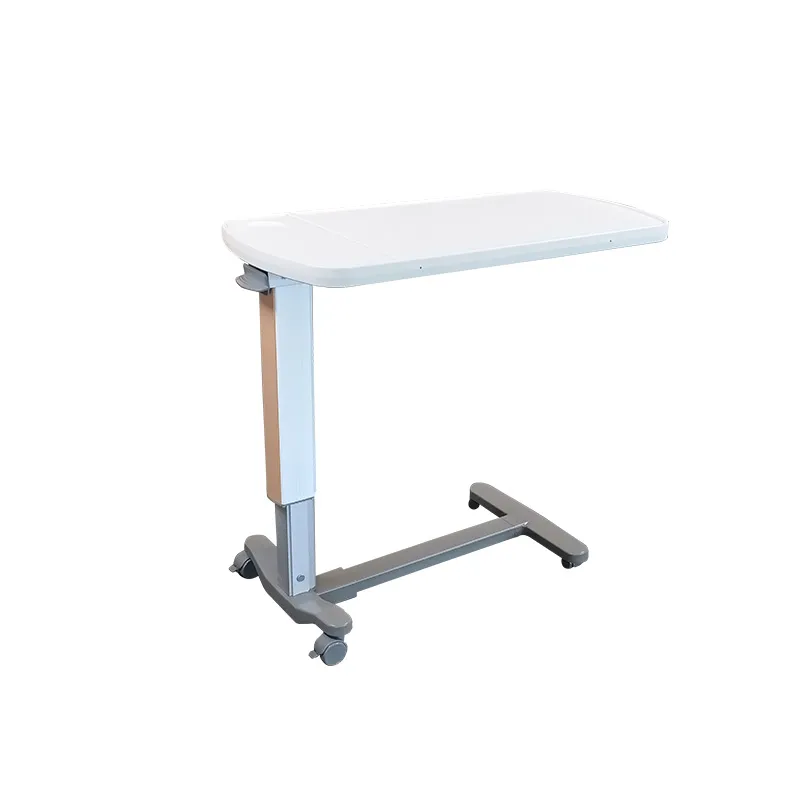
PP verstellbarer Krankenhaus-Überbetttisch für Patienten ZF-BT022
Technische Parameter:
|
Tischplatte |
895 x 445 mm |
|
Tischhöhe min. |
660 mm |
|
Tischhöhe, max. |
945 mm |
Technische Konfiguration:
|
Gasfeder |
1 Satz |
|
PP-Tischplatte |
1 Stück |
|
Φ25mm Caster |
2 Stück |
|
Φ50mm Caster |
2 Stück |
|
Griff zur Höhenverstellung |
1 Stück |
Qualitätskontrolle:
- Gasfeder: Der in den Krankenhaus-Überbetttisch integrierte Gasfedermechanismus spielt eine entscheidende Rolle bei der Verbesserung von Funktionalität und Sicherheit. Durch dieses Design lässt sich die Tischplatte problemlos und mühelos auf verschiedene Höhen einstellen, sodass sie sich optimal an die spezifischen Bedürfnisse der Patienten anpassen lässt, egal ob sie essen, lesen oder elektronische Geräte verwenden. Die Verwendung einer Gasfeder verringert das Risiko plötzlicher Bewegungen und minimiert so das Risiko von versehentlichen Verletzungen. Außerdem können Patienten, auch solche mit eingeschränkter Kraft oder Mobilität, den Tisch selbst einstellen, ohne Hilfe zu benötigen, was ein größeres Gefühl der Unabhängigkeit fördert. Diese durchdachte Integration einer Gasfeder in das Design von Überbetttischen unterstreicht den Fokus auf Patientenkomfort und -sicherheit in Gesundheitseinrichtungen.
- Material: Die Materialzusammensetzung von Krankenhaus-Überbetttischen trägt wesentlich zu ihrer Haltbarkeit, Sicherheit und Benutzerfreundlichkeit bei. Die Tischplatte besteht häufig aus PP (Polypropylen), das aufgrund seiner leichten, ungiftigen und leicht zu reinigenden Eigenschaften bevorzugt wird und sich daher ideal für eine Gesundheitsumgebung eignet, in der Hygiene an erster Stelle steht. Darüber hinaus bestehen der Hauptkörper und die Stützstruktur des Tisches normalerweise aus einer Aluminiumlegierung, die Festigkeit und Stabilität bietet und gleichzeitig leicht genug zum Manövrieren ist. Aluminiumlegierungen sind außerdem korrosionsbeständig, was in einer Krankenhausumgebung, in der der Tisch häufig mit verschiedenen Desinfektionsmitteln gereinigt werden kann, von entscheidender Bedeutung ist. Zusammen sorgen diese Materialien dafür, dass der Überbetttisch sowohl funktional als auch langlebig ist und den strengen Anforderungen des täglichen medizinischen Einsatzes standhält.
- Sicherheitsstandard: Hospital overbed table is designed and manufactured to meet stringent safety and quality standards, ensuring they are suitable for medical environments. They comply with the latest ISO 9001 and ISO 13485 standards, which are benchmarks for quality management systems and the specific requirements for medical devices, respectively. Additionally, these tables are certified by the CE marking, affirming that they meet EU safety, health, and environmental protection requirements. In the United States, they adhere to FDA regulations, ensuring that they are safe and effective for their intended use. Compliance with these standards not only guarantees the tables’ reliability and safety but also builds trust among healthcare providers and patients in the quality and safety of the equipment used in medical care.
Zubehördetail:
-
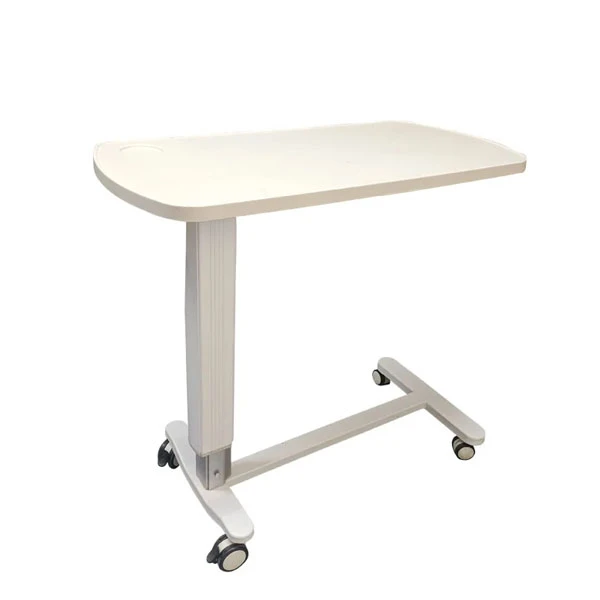
- Tischplatte: Die Tischplatte des Krankenhaus-Überbetttisches wurde mit Blick auf Patientenkomfort und Funktionalität durchdacht entworfen. Sie besteht aus weißem PP (Polypropylen) und bietet eine saubere, ungiftige und schmutzabweisende Oberfläche, die leicht zu pflegen und zu desinfizieren ist, was für die Aufrechterhaltung einer sterilen Umgebung in Krankenhäusern entscheidend ist. Das Design umfasst spezielle Funktionen wie einen vertieften Bereich für den allgemeinen Gebrauch und einen integrierten Getränkehalter, was den Nutzen erhöht. Der vertiefte Bereich hilft, Gegenstände wie Bücher, medizinische Geräte oder Essbesteck sicher an ihrem Platz zu halten und minimiert das Risiko, dass sie herunterrutschen, wenn der Tisch bewegt oder verstellt wird. Darüber hinaus verhindert der integrierte Getränkehalter das Verschütten, was in einer Gesundheitseinrichtung besonders wichtig ist, um Unfälle zu vermeiden und sicherzustellen, dass Flüssigkeiten von wichtigen Geräten und dem Patienten ferngehalten werden. Diese Kombination aus Materialauswahl und funktionalem Design macht die Tischplatte nicht nur langlebig und hygienisch, sondern auch äußerst praktisch für die vielfältigen Bedürfnisse von Krankenhauspatienten.
- Werfer: The mobility and stability of hospital overbed tables are significantly enhanced by their caster design, which features four omnidirectional wheels. This setup includes two larger casters with a diameter of 50mm and two smaller casters with a diameter of 25mm. The larger wheels are equipped with independent brakes, providing robust stopping power and ensuring the table remains securely in place when needed. This braking mechanism is crucial for maintaining safety, preventing the table from moving or shifting when patients use it for eating, reading, or supporting medical devices. The smaller wheels, while not braked, contribute to the table’s overall ease of maneuverability, allowing it to glide smoothly over various floor types within the hospital environment. This combination of differently sized wheels optimizes both the table’s mobility for repositioning and its stability when stationary, meeting the dynamic needs of a hospital setting.
- Base: The base of the hospital overbed table is thoughtfully designed with an aluminum alloy cover, which serves multiple crucial purposes in a healthcare environment. Aluminum alloy, known for its durability and resistance to corrosion, adds structural integrity and longevity to the table. The material’s smooth surface is particularly beneficial in hospital settings as it prevents the accumulation of dust and bacteria, crucial for maintaining a sterile environment. This feature makes the base much easier to clean and disinfect, a vital aspect in preventing hospital-acquired infections. The combination of aluminum alloy and its protective cover ensures that the table not only withstands frequent use and cleaning but also adheres to the high standards of hygiene required in medical settings, thereby safeguarding both patient and staff health.
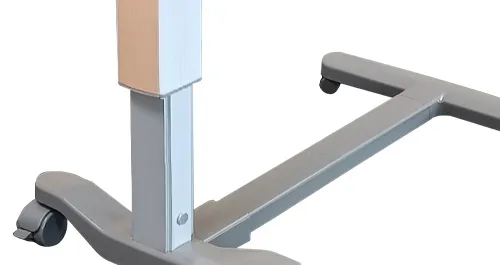
- Hubsäule: Die Hubsäule des Krankenhaus-Überbetttisches ist sorgfältig aus einer Aluminiumlegierung gefertigt, was sowohl ihre funktionalen als auch ihre hygienischen Eigenschaften verbessert. Diese Säule zeichnet sich durch ein Design aus, bei dem der obere Abschnitt den unteren Abschnitt umschließt, eine strategische Entscheidung, die Spalten und Lücken minimiert, in denen sich sonst Bakterien ansammeln könnten. Eine solche Konfiguration ist in einem Krankenhausumfeld, in dem die Verhinderung der Ausbreitung von Krankheitserregern von größter Bedeutung ist, äußerst vorteilhaft. Aluminiumlegierung, bekannt für ihre Robustheit und Korrosionsbeständigkeit, stellt sicher, dass die Säule häufigen Anpassungen und starker Beanspruchung standhält, die in Krankenhausumgebungen typisch sind. Darüber hinaus sind die glatten Oberflächen der Aluminiumlegierung leicht zu reinigen und zu desinfizieren, was für die Aufrechterhaltung einer sterilen Umgebung unerlässlich ist. Dieses durchdachte Design erleichtert nicht nur die Wartung, sondern trägt auch erheblich zur allgemeinen Hygiene und Sicherheit des Krankenhaus-Überbetttisches bei.
-
Hubsäule
-
Stützsäule aus Aluminiumlegierung, die obere Säule bestimmt das Design der unteren Säule, verhindert wirksam Bakterienansammlungen und ist leicht zu reinigen.
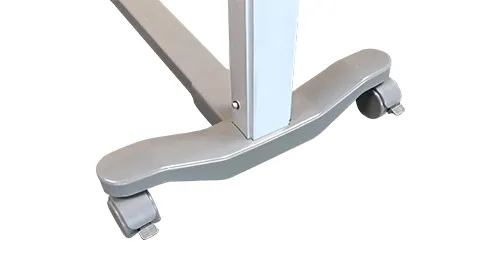
Werfer
Vier Universalrollen. Zwei Rollen mit 50 mm Durchmesser und unabhängigen Bremsen für besseres Bremsen. Zwei weitere Rollen mit 25 mm Durchmesser.
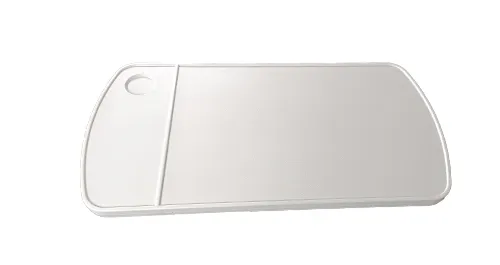
TISCHPLATTE
Weiße PP-Schreibtischplatte mit vertieftem Design für Wasserbecher und Hauptnutzungsbereiche.
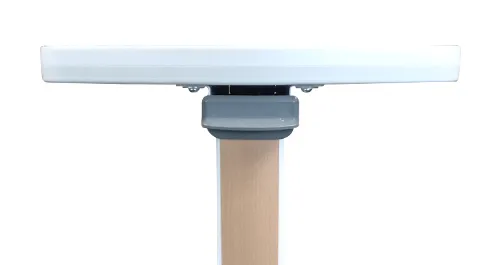
HÖHENVERSTELLUNG
Stellen Sie die Höhe ein, indem Sie den seitlichen Griff anheben oder auf die Tischplatte drücken. Der Einstellbereich beträgt 660 mm - 945 mm.
-
Height Adjustment Function and Operation Mechanism of PP Adjustable Hospital Moving Table
ZhaofaMed’s PP adjustable hospital overbed table redefines convenience in patient care through its precision-engineered height adjustment system, a core feature that enhances its versatility as a hospital moving table. Designed to adapt to diverse patient needs, this table merges intuitive operation with robust mechanics, making it an essential tool in wards, rehabilitation centers, and home care settings.
The height adjustment range is meticulously calibrated to accommodate various scenarios: from 70cm (ideal for seated patients) to 110cm (suitable for standing or semi-recumbent use). This flexibility ensures compatibility with different bed heights, wheelchairs, and treatment protocols, allowing patients to engage in activities like dining, reading, or medical procedures without leaving their beds. As a hospital moving table, this adaptability transforms static care spaces into dynamic environments, supporting both independence and clinical efficiency.
At the heart of its operation is a gas spring-assisted mechanism, chosen for its smooth, silent performance. The system uses compressed gas to counterbalance the table’s weight, enabling effortless height adjustments with minimal force—even for patients with limited upper body strength. A large, ergonomically positioned release lever (located under the table edge) activates the mechanism; squeezing it unlocks the height lock, allowing users to raise or lower the table to their desired position. Releasing the lever engages a safety lock, securing the table firmly in place to prevent unintended movement—a critical safety feature in busy healthcare settings.
The mechanism’s durability is reinforced by high-grade materials: the adjustment column is crafted from anodized aluminum, resistant to corrosion and wear, while the PP tabletop (smooth, non-porous) adds lightweight stability. This combination ensures the hospital's moving table maintains consistent performance over thousands of adjustments, withstanding frequent use in high-traffic areas.
For caregivers, the intuitive design reduces training time and streamlines patient assistance, as adjustments can be made quickly during rounds. For patients, the ability to control table height fosters a sense of autonomy, enhancing their overall care experience. When paired with the table’s smooth-rolling casters (a hallmark of a functional hospital moving table), the height adjustment system creates a versatile solution that adapts seamlessly to evolving care needs.
In essence, ZhaofaMed’s focus on user-centric engineering transforms this overbed table into more than a utility—it becomes a tool that empowers patients and simplifies care, with height adjustment at its core. This attention to detail solidifies its role as a leading hospital moving table in modern healthcare environments.
Boosting Patient Independence and Care Efficiency: The Role of Adjustable Hospital Moving Tables
ZhaofaMed’s adjustable hospital overbed table, as a versatile hospital moving table, serves as a catalyst for enhancing patient autonomy while streamlining caregiver workflows. Its design prioritizes both self-sufficiency for patients and operational efficiency for staff, making it a transformative tool in healthcare settings.
For patients, the table’s adjustability fosters newfound independence. With height ranges from 70cm to 110cm and smooth angle adjustments (0°–30°), individuals can easily position the table to suit their activities—whether dining, reading, using a tablet, or managing personal items—without relying on assistance. This autonomy is particularly impactful for post-surgery or rehabilitation patients, as it restores a sense of control over daily routines, boosting mental well-being and accelerating recovery. The hospital's moving table’s lightweight PP top (4kg) and easy-glide casters allow patients to reposition it independently, further reducing dependency on staff for minor adjustments.
Caregivers benefit from significant efficiency gains. The table’s intuitive design minimizes the need for constant intervention: its one-touch height lock and stable base eliminate time spent readjusting surfaces during meal times or medication administration. The spacious 80cm×45cm tabletop, featuring built-in cup holders and a recessed tray, organizes essentials (water, meds, utensils) in one place, reducing trips to fetch items—a critical advantage in busy wards. As a hospital moving table, its maneuverability (via 360° rotating casters with brakes) allows seamless movement between beds, enabling staff to serve multiple patients with minimal effort.
Additionally, the table’s compatibility with various care scenarios—from acute wards to home care—enhances workflow consistency. Its durable aluminum frame and easy-to-clean surface (resistant to disinfectants) reduce maintenance time, ensuring it remains functional round-the-clock. For patients requiring frequent monitoring, the table doubles as a stable surface for medical devices (e.g., blood pressure monitors), consolidating care tools and cutting down on setup time.
By bridging patient empowerment and operational efficiency, this hospital's moving table transcends its utility as a mere furniture piece. It becomes a key contributor to better care outcomes—empowering patients to reclaim independence while enabling caregivers to focus on high-priority tasks. In essence, it redefines the role of assistive equipment in fostering a more efficient, patient-centric healthcare environment.
hospital moving table