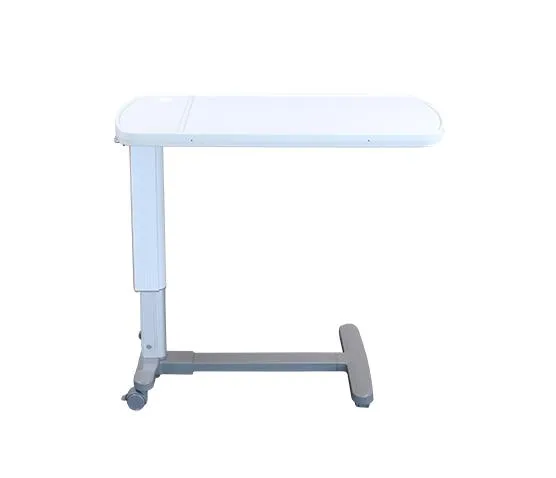
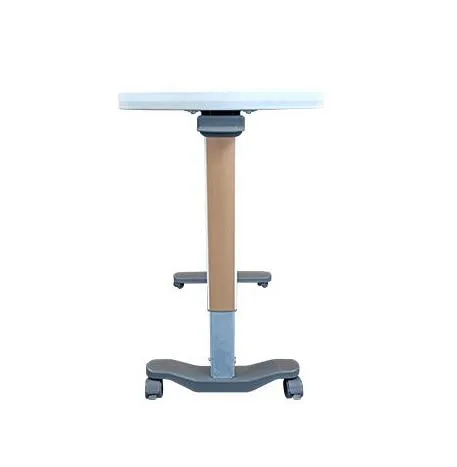
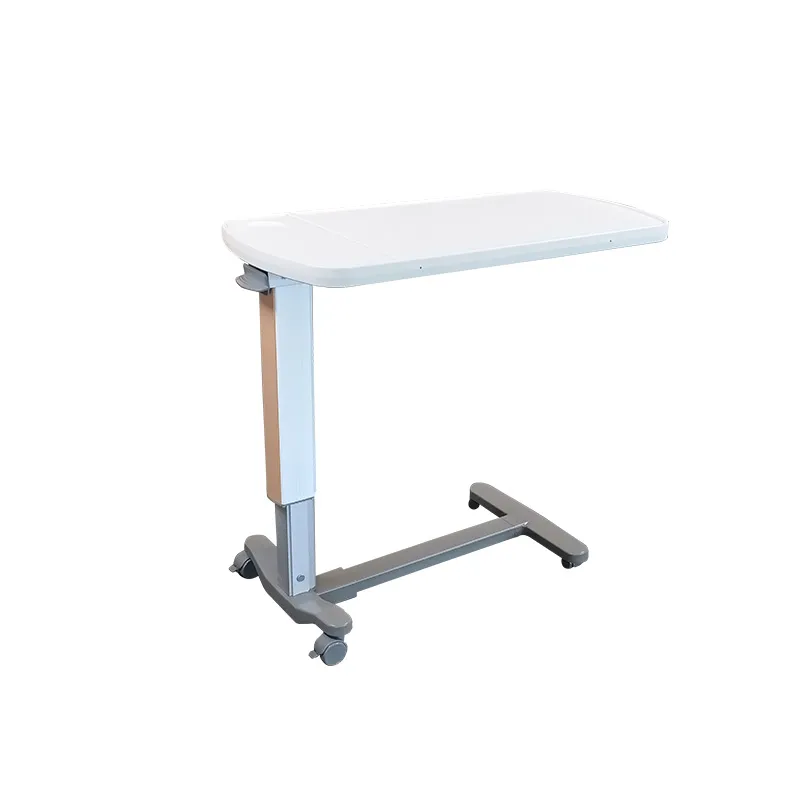
PP Daidaitacce Asibiti Sama da Tebur Ga Mara lafiya ZF-BT022
Sigar Fasaha:
|
Babban Tebur |
895*445mm |
|
Tebur Tsayin Min |
mm 660 |
|
Tsawon Tebur Max |
mm 945 |
Tsarin Fasaha:
|
Gas Spring |
1 saiti |
|
PP Table Top |
1pc |
|
Φ25mm Caster |
2pcs |
|
Φ50mm Caster |
2pcs |
|
Hannun Daidaita Tsawo |
1pc |
Kula da inganci:
- Gas Spring: Na'urar samar da iskar gas da aka haɗe cikin teburin gadon asibiti yana taka muhimmiyar rawa wajen haɓaka aiki da aminci. Wannan ƙirar tana ba da damar daidaita saman tebur ɗin a hankali kuma ba tare da wahala ba zuwa tsayi daban-daban, yana mai da shi dacewa sosai ga takamaiman bukatun marasa lafiya, ko suna ci, karatu, ko amfani da na'urorin lantarki. Yin amfani da maɓuɓɓugar iskar gas yana rage haɗarin motsi na kwatsam, don haka rage yiwuwar raunin haɗari. Hakanan yana bawa marasa lafiya damar, gami da waɗanda ke da ƙarancin ƙarfi ko motsi, don daidaita teburin da kansu ba tare da buƙatar taimako ba, haɓaka mafi girman ma'anar 'yancin kai. Wannan haɗe-haɗe mai zurfin tunani na tushen iskar gas a cikin ƙirar tebur ɗin da ke kan gado yana ba da fifikon mayar da hankali kan jin daɗin haƙuri da aminci a cikin saitunan kiwon lafiya.
- Abu: Abubuwan da ke tattare da kayan abinci na teburin da ke kan gadon asibiti yana ba da gudummawa sosai ga dorewa, aminci, da sauƙin amfani. Ana yin tebur sau da yawa daga kayan PP (polypropylene), wanda aka fi so don nauyinsa mai sauƙi, maras guba, da sauƙin tsaftacewa, yana sa ya dace da yanayin kiwon lafiya inda tsafta ke da mahimmanci. Bugu da ƙari, babban jiki da tsarin tallafi na tebur yawanci ana yin su ne daga gami da aluminium, wanda ke ba da ƙarfi da kwanciyar hankali yayin da ya rage haske don motsawa. Aluminum gami kuma yana da juriya ga lalata, wanda ke da mahimmanci a saitin asibiti inda za'a iya tsaftace tebur akai-akai tare da magunguna daban-daban. Tare, waɗannan kayan suna tabbatar da cewa teburin da ke kan gado yana aiki duka kuma yana daɗewa, yana iya jure ƙaƙƙarfan buƙatun amfani da magani na yau da kullun.
- Matsayin Tsaro: Hospital overbed table is designed and manufactured to meet stringent safety and quality standards, ensuring they are suitable for medical environments. They comply with the latest ISO 9001 and ISO 13485 standards, which are benchmarks for quality management systems and the specific requirements for medical devices, respectively. Additionally, these tables are certified by the CE marking, affirming that they meet EU safety, health, and environmental protection requirements. In the United States, they adhere to FDA regulations, ensuring that they are safe and effective for their intended use. Compliance with these standards not only guarantees the tables’ reliability and safety but also builds trust among healthcare providers and patients in the quality and safety of the equipment used in medical care.
Ƙarin Bayani:
-
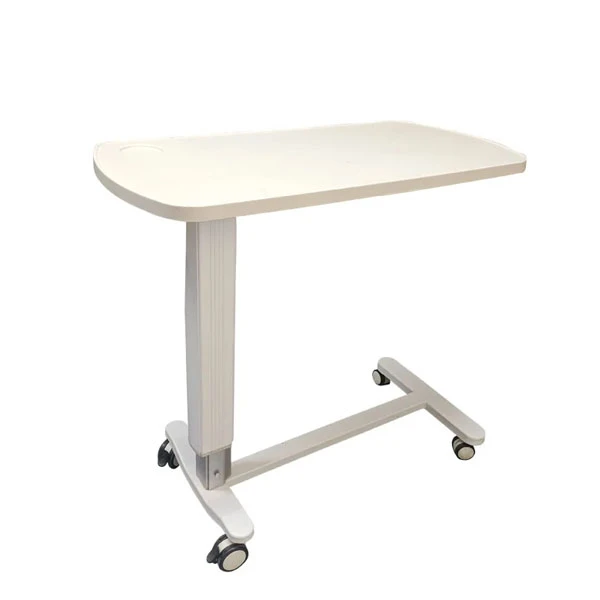
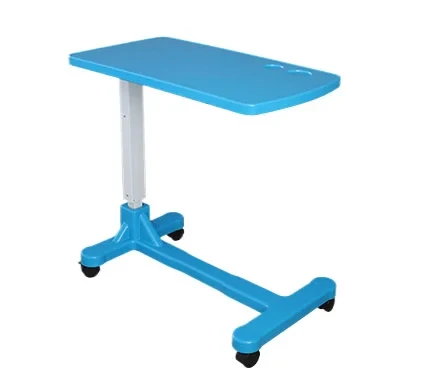
- Babban Tebur: Teburin tebur na asibiti an tsara shi da tunani tare da jin daɗin haƙuri da aiki a zuciya. An yi shi daga farin PP (polypropylene), yana ba da wuri mai tsabta, mara guba, da tabo mai jurewa wanda ke da sauƙin kulawa da lalata, mai mahimmanci don kula da yanayi mara kyau a asibitoci. Ƙirar ta ƙunshi siffofi na musamman kamar wurin da aka ajiye don amfanin gabaɗaya da ginanniyar faifan kofi, yana haɓaka amfanin sa. Sashin da aka ajiye yana taimakawa wajen adana abubuwa kamar littattafai, na'urorin likitanci, ko kayan cin abinci amintattu a wurin, yana rage haɗarin su zamewa lokacin da aka motsa ko daidaita teburin. Bugu da ƙari, haɗaɗɗen ƙoƙon yana hana zubewa, wanda ke da mahimmanci musamman a cikin yanayin kiwon lafiya don guje wa haɗari da tabbatar da cewa an kiyaye ruwa daga na'urori masu mahimmanci da majiyyaci. Wannan haɗin zaɓin kayan aiki da ƙirar aiki yana sa tebur ɗin ba kawai mai dorewa da tsabta ba amma har ma yana da amfani sosai ga buƙatun daban-daban na marasa lafiya na asibiti.
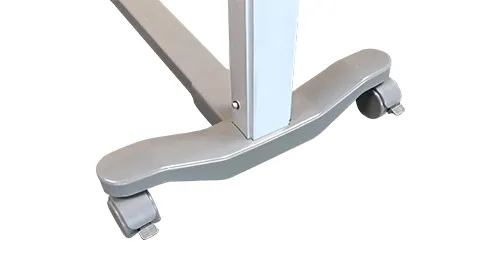
- Caster: The mobility and stability of hospital overbed tables are significantly enhanced by their caster design, which features four omnidirectional wheels. This setup includes two larger casters with a diameter of 50mm and two smaller casters with a diameter of 25mm. The larger wheels are equipped with independent brakes, providing robust stopping power and ensuring the table remains securely in place when needed. This braking mechanism is crucial for maintaining safety, preventing the table from moving or shifting when patients use it for eating, reading, or supporting medical devices. The smaller wheels, while not braked, contribute to the table’s overall ease of maneuverability, allowing it to glide smoothly over various floor types within the hospital environment. This combination of differently sized wheels optimizes both the table’s mobility for repositioning and its stability when stationary, meeting the dynamic needs of a hospital setting.
- Tushen: The base of the hospital overbed table is thoughtfully designed with an aluminum alloy cover, which serves multiple crucial purposes in a healthcare environment. Aluminum alloy, known for its durability and resistance to corrosion, adds structural integrity and longevity to the table. The material’s smooth surface is particularly beneficial in hospital settings as it prevents the accumulation of dust and bacteria, crucial for maintaining a sterile environment. This feature makes the base much easier to clean and disinfect, a vital aspect in preventing hospital-acquired infections. The combination of aluminum alloy and its protective cover ensures that the table not only withstands frequent use and cleaning but also adheres to the high standards of hygiene required in medical settings, thereby safeguarding both patient and staff health.
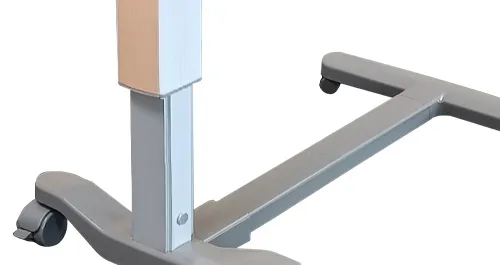
- Rukunin ɗagawa: An ƙera ginshiƙin ɗagawa na teburin da ke kan gadon asibiti da kyau ta hanyar amfani da alluran alloy, wanda ke haɓaka kayan aikin sa da na tsafta. Wannan ginshiƙi yana fasalta ƙira inda ɓangaren babba ya ƙunshi ƙananan sashe, zaɓi na dabara wanda ke rage ɓangarorin da giɓi inda ƙwayoyin cuta za su iya taruwa. Irin wannan tsari yana da matukar fa'ida a cikin asibiti inda hana yaduwar ƙwayoyin cuta ke da mahimmanci. Aluminum alloy, wanda aka sani da ƙarfinsa da juriya ga lalata, yana tabbatar da cewa ginshiƙi na iya jure wa gyare-gyare akai-akai da amfani mai nauyi a cikin yanayin asibiti. Bugu da ƙari, filaye masu santsi na gami da aluminium suna da sauƙin tsaftacewa da kuma lalata su, wanda ke da mahimmanci don kiyaye muhalli mara kyau. Wannan zane mai tunani ba kawai yana sauƙaƙe kulawa ba har ma yana ba da gudummawa sosai ga tsafta da amincin teburin da ke kan gadon asibiti.
-
SHAFIN Ɗagawa
-
Aluminum alloy mai goyan bayan shafi, ginshiƙi na sama ya saita ƙirar ƙananan ginshiƙi, yadda ya kamata ya hana tarin ƙwayoyin cuta, mai sauƙin tsaftacewa.
CASTER
Guda huɗu na duniya casters. Siminti 50mm diamita biyu tare da birki mai zaman kansa don ingantacciyar birki. Biyu sauran 25mm diamita casters.
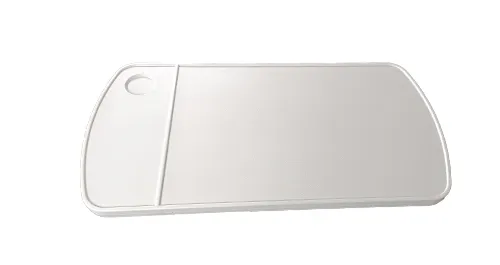
TABLE TOP
Farin tebur na PP tare da ƙira don kofuna na ruwa da manyan wuraren amfani.
GYARAN TSAYI
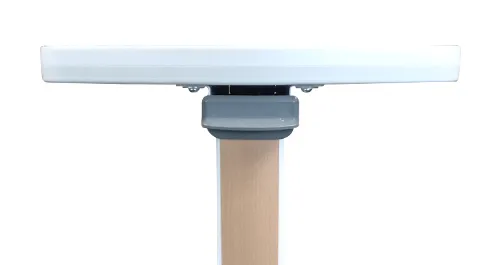
Daidaita tsayi ta ɗaga hannun gefe ko danna saman tebur. Matsakaicin daidaitawa shine 660mm-945mm.
-
Height Adjustment Function and Operation Mechanism of PP Adjustable Hospital Moving Table
ZhaofaMed’s PP adjustable hospital overbed table redefines convenience in patient care through its precision-engineered height adjustment system, a core feature that enhances its versatility as a hospital moving table. Designed to adapt to diverse patient needs, this table merges intuitive operation with robust mechanics, making it an essential tool in wards, rehabilitation centers, and home care settings.
The height adjustment range is meticulously calibrated to accommodate various scenarios: from 70cm (ideal for seated patients) to 110cm (suitable for standing or semi-recumbent use). This flexibility ensures compatibility with different bed heights, wheelchairs, and treatment protocols, allowing patients to engage in activities like dining, reading, or medical procedures without leaving their beds. As a hospital moving table, this adaptability transforms static care spaces into dynamic environments, supporting both independence and clinical efficiency.
At the heart of its operation is a gas spring-assisted mechanism, chosen for its smooth, silent performance. The system uses compressed gas to counterbalance the table’s weight, enabling effortless height adjustments with minimal force—even for patients with limited upper body strength. A large, ergonomically positioned release lever (located under the table edge) activates the mechanism; squeezing it unlocks the height lock, allowing users to raise or lower the table to their desired position. Releasing the lever engages a safety lock, securing the table firmly in place to prevent unintended movement—a critical safety feature in busy healthcare settings.
The mechanism’s durability is reinforced by high-grade materials: the adjustment column is crafted from anodized aluminum, resistant to corrosion and wear, while the PP tabletop (smooth, non-porous) adds lightweight stability. This combination ensures the hospital's moving table maintains consistent performance over thousands of adjustments, withstanding frequent use in high-traffic areas.
For caregivers, the intuitive design reduces training time and streamlines patient assistance, as adjustments can be made quickly during rounds. For patients, the ability to control table height fosters a sense of autonomy, enhancing their overall care experience. When paired with the table’s smooth-rolling casters (a hallmark of a functional hospital moving table), the height adjustment system creates a versatile solution that adapts seamlessly to evolving care needs.
In essence, ZhaofaMed’s focus on user-centric engineering transforms this overbed table into more than a utility—it becomes a tool that empowers patients and simplifies care, with height adjustment at its core. This attention to detail solidifies its role as a leading hospital moving table in modern healthcare environments.
Boosting Patient Independence and Care Efficiency: The Role of Adjustable Hospital Moving Tables
ZhaofaMed’s adjustable hospital overbed table, as a versatile hospital moving table, serves as a catalyst for enhancing patient autonomy while streamlining caregiver workflows. Its design prioritizes both self-sufficiency for patients and operational efficiency for staff, making it a transformative tool in healthcare settings.
For patients, the table’s adjustability fosters newfound independence. With height ranges from 70cm to 110cm and smooth angle adjustments (0°–30°), individuals can easily position the table to suit their activities—whether dining, reading, using a tablet, or managing personal items—without relying on assistance. This autonomy is particularly impactful for post-surgery or rehabilitation patients, as it restores a sense of control over daily routines, boosting mental well-being and accelerating recovery. The hospital's moving table’s lightweight PP top (4kg) and easy-glide casters allow patients to reposition it independently, further reducing dependency on staff for minor adjustments.
Caregivers benefit from significant efficiency gains. The table’s intuitive design minimizes the need for constant intervention: its one-touch height lock and stable base eliminate time spent readjusting surfaces during meal times or medication administration. The spacious 80cm×45cm tabletop, featuring built-in cup holders and a recessed tray, organizes essentials (water, meds, utensils) in one place, reducing trips to fetch items—a critical advantage in busy wards. As a hospital moving table, its maneuverability (via 360° rotating casters with brakes) allows seamless movement between beds, enabling staff to serve multiple patients with minimal effort.
Additionally, the table’s compatibility with various care scenarios—from acute wards to home care—enhances workflow consistency. Its durable aluminum frame and easy-to-clean surface (resistant to disinfectants) reduce maintenance time, ensuring it remains functional round-the-clock. For patients requiring frequent monitoring, the table doubles as a stable surface for medical devices (e.g., blood pressure monitors), consolidating care tools and cutting down on setup time.
By bridging patient empowerment and operational efficiency, this hospital's moving table transcends its utility as a mere furniture piece. It becomes a key contributor to better care outcomes—empowering patients to reclaim independence while enabling caregivers to focus on high-priority tasks. In essence, it redefines the role of assistive equipment in fostering a more efficient, patient-centric healthcare environment.
hospital moving table